0%

Choosing the right Aluminium Entry Door supplier in 2026 requires more than comparing catalogue prices. Global buyers must examine material quality, manufacturing experience, testing records, and after-sales support. A door may look impressive online, yet its frame, hinges, thermal break, or powder coating can perform differently in real weather.

This guide introduces leading Aluminium Entry Door suppliers for international projects. It considers factory capability, product customization, production consistency, certifications, packaging, and export experience. Practical details matter. For example, a reliable supplier should explain alloy grades, glass specifications, water drainage, locking systems, and installation tolerances clearly. They should also provide accurate drawings and realistic lead times.

No supplier is perfect. That matters.

Some companies offer attractive designs but limited technical support. Others provide strong engineering but slower communication or higher minimum orders. Buyers should verify references, request samples, inspect surface finishes, and compare warranty terms before signing a contract. A small sample corner can reveal coating unevenness, weak sealing, or poor assembly.

The following overview is designed for architects, contractors, distributors, and property developers seeking dependable global partners. It balances professional evidence with practical buying experience, while recognizing that regional climate, building standards, shipping conditions, and installation skills can change the final result. Supplier rankings may also require regular review, because capabilities and service levels can change. Careful judgment remains essential.
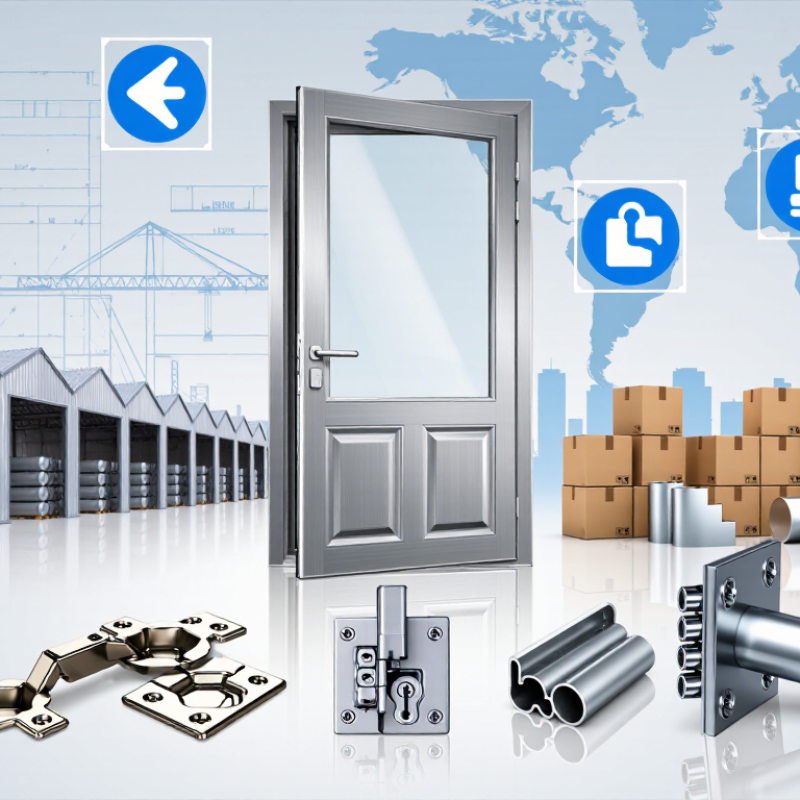
2026 Best Aluminium Entry Door Suppliers for Global Buyers

Aluminium Entry Door Market Overview for Global Buyers in 2026

2026 Best Aluminium Entry Door Suppliers for Global Buyers

Aluminium Entry Door Market Overview for Global Buyers in 2026

In 2026, global buyers are comparing aluminium entry doors by performance, configuration, and delivery support—not appearance alone. Aluminium frames offer a slim profile and resist many forms of weather-related wear. Yet performance depends on the full assembly: thermal breaks, seals, glazing, hardware, and installation quality. Coastal air, strong sun, and cold winters can place very different demands on one door specification. Small details matter.

Tips: Ask suppliers for frame and glass specifications, finish-care instructions, and clear dimensional drawings. Confirm opening direction, threshold height, and hardware before production. Request a sample finish when color consistency matters. Check whether the quoted package includes suitable packing and technical guidance for installation.

For international orders, communication and documentation can matter as much as the quoted price. Buyers should compare lead times, packing methods, and the process for handling damaged or incorrect components. Confirm local performance requirements with a qualified building professional; product claims may not cover every project condition. One point is easy to overlook: a highly customized door can fit beautifully, but it may complicate replacement parts later. Standard dimensions are not always practical, either. The right choice depends on the opening, climate, and maintenance plan.

Key Criteria for Evaluating International Door Suppliers

When comparing aluminium entry door suppliers, evaluate tested performance, not catalogue claims. Ask for whole-door test reports covering air leakage, water penetration, structural load, and thermal transmission. Confirm the report matches the proposed size, glazing, hardware, and threshold; a component certificate alone may not represent the finished door. The U.S. Department of Energy’s Energy Saver guidance estimates that windows account for 25–30% of residential heating and cooling energy use. For glazed entry doors, this makes the glass specification and frame’s thermal break worth checking carefully. Details matter. Request test methods, laboratory details, and report dates.

Tips: Compare the declared U-factor and air-leakage results for the complete door assembly. Ask for installation drawings, finish-care instructions, spare-parts availability, and a written warranty. Have a local engineer review suitability for the project’s wind exposure and climate.

For international orders, assess packing protection, lead times, export documentation, and the supplier’s process for handling damaged goods. Request references for comparable projects and inspect a production sample, including corner joints, drainage paths, seals, and finish consistency. A sample cannot prove long-term durability, though. Treat it as one check among several, and verify claims against independent test records before committing to volume.

2026 Best Aluminium Entry Door Suppliers for Global Buyers - Key Criteria for Evaluating International Door Suppliers

Use this supplier-evaluation framework to compare documented capabilities. The suggested weights are a buyer-side screening tool, not a ranking of specific suppliers; confirm requirements for the destination market and project.

Evaluation criterion Suggested weight What to verify Useful evidence to request Buyer evaluation notes
Destination-market compliance 15% Whether the proposed doorset documentation and declared performance meet the rules applicable to the destination and intended use. Applicable declarations, test reports, labeling details, and supporting technical documentation. For EU projects, ask about applicable Construction Products Regulation documentation and the relevant product standard. Check that documents cover the quoted door configuration, sizes, hardware, and intended application—not merely a similar product.
Thermal and weather performance 15% Declared thermal transmittance and tested air-leakage, water-penetration, and wind-load performance, where required. Configuration-specific test reports and calculation or declaration documents. ASTM E283, E331, and E330 are examples of test methods used for air leakage, water penetration, and structural performance, respectively. Compare results only when test methods, specimen details, dimensions, and rating conditions are comparable. Performance depends on the complete doorset and installation, not the aluminum frame alone.
Product and configuration capability 10% Available opening styles, maximum tested sizes, glazing or panel options, thresholds, finishes, and compatible hardware. Current technical catalogue, drawings, configuration limits, finish samples, and written confirmation of deviations from standard specifications. Confirm that requested options do not invalidate the cited test results or affect compliance, durability, or warranty coverage.
Quality management and traceability 10% Documented production controls, incoming-material checks, final inspection, nonconformance handling, and batch or order traceability. Quality-system certificate and scope, inspection plans, sample inspection records, corrective-action process, and traceability examples. Verify certificate validity with its issuer where appropriate. A quality-management certificate indicates a management system; it does not by itself prove that a particular door meets project performance requirements.
Materials, finish, and durability 10% Specified aluminum alloy and finish system, corrosion considerations, drainage details, seals, and hardware durability for the project environment. Material and finish specifications, coating-process details, applicable test evidence, maintenance guidance, and samples representing the quoted finish. Assess exposure conditions such as coastal or high-humidity locations. Confirm finish exclusions, cleaning requirements, and repair procedures in writing.
Engineering and customization support 10% Ability to review opening measurements, provide shop drawings, coordinate interfaces, and manage approved design changes. Sample shop drawings, dimensional survey requirements, drawing-approval workflow, change-control process, and named technical contact role. Clarify who is responsible for site measurements, structural interfaces, installation details, and approval of final dimensions.
Export packaging and logistics readiness 10% Protection against handling and transit damage, packing identification, shipping-document support, and clarity on delivery terms. Packaging specification, loading plan, sample shipping marks, export-document checklist, and a written quotation stating the delivery term and named place. Agree who arranges freight, insurance, customs clearance, unloading, and claims handling. Inspect packaging requirements for the route and transport mode.
Lead time and order communication 10% Quoted production and dispatch schedule, order milestones, capacity planning, and communication process for delays or changes. Project-specific schedule, milestone definitions, production-slot confirmation, and a written escalation contact or process. Treat lead time as order- and configuration-specific. Confirm when the schedule starts and which approvals, deposits, or material selections affect it.
Warranty and after-sales support 10% Warranty duration and exclusions, claims process, replacement-part availability, and access to installation or maintenance guidance. Written warranty terms, claim requirements, spare-parts policy, service contact details, and maintenance instructions. Compare coverage by component and remedy. Check whether labor, transport, installation, environmental exposure, or improper maintenance is excluded.
Total suggested weight 100% Adjust the weights to reflect project risk, destination-market requirements, and the buyer’s priorities.

Top Aluminium Entry Door Supplier Categories and Regional Strengths

Aluminium entry door suppliers generally fall into three groups: extrusion-led manufacturers, complete-door fabricators, and project-focused system integrators. Extrusion-led firms can offer broad profile choices, while fabricators usually control assembly, glazing, and finishing more closely. Integrators may coordinate hardware, installation details, and custom dimensions. These categories overlap, so buyers should verify who owns each production step.

Regional strengths often reflect industrial networks, not guaranteed quality. East Asian suppliers offer extensive extrusion and finishing capacity; European firms commonly emphasize thermal breaks and tested performance; Turkish and Middle Eastern manufacturers serve varied architectural projects; North American suppliers often handle custom sizing and local project specifications. The International Aluminium Institute reported about 70.6 million tonnes of global primary aluminium production in 2023. That figure shows material scale, not door-making capacity. A large aluminium industry does not prove consistent assembly quality.

Ask for section drawings, coating specifications, air and water test results, and hardware schedules. Check whether samples match production finishes; a small color difference can become obvious across a sunlit entrance. Also compare packaging and replacement-part support, not just unit price. Not interchangeable. I would treat regional reputation as a starting clue, then inspect factory records and project references. Suppliers sometimes provide impressive samples but limited evidence of repeatable output.

2026 Best Aluminium Entry Door Suppliers for Global Buyers

Top supplier categories and regional strengths based on the availability of aluminium production, extrusion capacity, and door-system manufacturing ecosystems.

Integrated Aluminium Suppliers

Strong control over billet, alloy, extrusion, finishing, and door assembly. Particularly suitable for large-volume and standardized projects.

Extrusion-Focused Suppliers

Best for buyers requiring customized profiles, thermal-break solutions, anodizing, powder coating, and flexible engineering support.

Project Door-System Specialists

Focus on complete entry-door systems, including hardware integration, glazing, security options, testing, and installation documentation.

Custom OEM Manufacturers

Suitable for private-label programs, bespoke designs, mixed container orders, and market-specific compliance requirements.

Data source: International Aluminium Institute, 2023 primary aluminium production statistics. Figures are rounded and grouped by major production regions; primary aluminium output is an indicator of regional supply depth, not direct aluminium entry-door production.

Quality, Compliance, Customization, and Delivery Considerations

2026 Best Aluminium Entry Door Suppliers for Global Buyers

Choosing an aluminium entry door supplier requires more than comparing online prices. Quality begins with alloy grade, profile thickness, thermal breaks, and powder-coating performance. Ask for sample sections, finish cards, and recent inspection records. A reliable supplier should explain how corners are joined and how water drainage works. Small details matter.

Compliance depends on the destination market. Request declarations, test reports, fire information, and hardware specifications before placing an order. Check wind-load, air-leakage, water-tightness, and thermal performance data. Documents should match the actual door configuration. Generic certificates can create costly delays. Requirements also change between regions, so local verification remains necessary.

Customization should cover dimensions, glazing, thresholds, locks, colors, opening direction, and packaging. Confirm every detail in an approved technical drawing. One overlooked millimeter can affect installation. Delivery planning needs realistic production time, port schedules, spare parts, and damage controls. Strong suppliers use corner protection, moisture barriers, and photographed loading records. Yet no process is perfect. Buyers should allow time for rework, inspections, and unexpected customs questions. Clear communication often prevents a small drawing error from becoming a container-sized problem.

How to Select the Right Supplier for Your Project Needs

2026 Best Aluminium Entry Door Suppliers for Global Buyers

How to Select the Right Supplier for Your Project Needs

Start with the building, not the catalogue. A coastal home, a busy hotel, and a cold-climate office place different demands on an entry door. Share the opening dimensions, exposure, traffic level, and preferred glazing with potential suppliers. Details matter. Ask how the frame, thermal break, seals, and threshold work together, rather than comparing frame thickness alone.

Request project-specific drawings and clear performance data for air leakage, water resistance, and structural loading. Check which test methods were used and whether results apply to the proposed door configuration. A well-presented certificate is useful, but it may not cover your exact size or hardware. Ask for finish samples, corner-joint details, and hardware specifications. If practical, inspect a sample assembly or a completed installation. This part takes time.

Also assess how the supplier handles revisions, packaging, delivery estimates, and after-sales questions. Confirm what is included in the quotation, such as glazing, locks, installation guidance, and replacement components. Compare realistic lead times, not just the earliest promise. Communication is a performance factor too. A supplier that answers technical questions clearly can help prevent costly changes later. Still, no checklist removes every risk; project drawings often change, and buyers should allow room for review before production.

FAQS

What performance documents should I request from an aluminium entry door supplier?

Request whole-door reports for air leakage, water penetration, structural load, and thermal transmission. The report should match the proposed size, glass, hardware, and threshold. Component certificates alone may mislead. Ask for test methods, laboratory details, and report dates.

Why does the glazing specification matter?

Glazed doors can influence household heating and cooling demand. Check the glass type, frame thermal break, and declared U-factor. Compare complete-door results, not isolated glass data. Small details matter.

How can I check product quality before ordering?

Request section drawings, finish cards, inspection records, and recent project references. Inspect a sample’s corner joints, drainage paths, seals, and coating consistency. Look closely at the bottom threshold. A sample can mislead. It cannot prove long-term durability.

Which type of supplier may suit my project?

Extrusion-led manufacturers often provide many profile options. Complete-door fabricators usually control assembly, glazing, and finishing more closely. Project integrators may coordinate hardware, dimensions, and installation details. Ask who owns each production step. Responsibilities can overlap.

How should I evaluate regional supplier strengths?

Regional reputation is only a starting clue. Industrial capacity does not guarantee careful door assembly. Review factory records, repeat-project evidence, and independent test reports. A large material industry proves scale, not consistency.

What compliance information should international buyers verify?

Request declarations, fire information, hardware schedules, and performance reports. Check wind-load, air-leakage, water-tightness, and thermal data. Documents must match the actual configuration. Local professionals should confirm destination requirements. Rules can differ.

What customization details must appear in the approved drawing?

Confirm dimensions, glazing, threshold type, locks, colors, opening direction, and packaging. Include hardware positions and drainage details. One missed millimeter can disrupt installation. Review every revision carefully. Errors happen.

How can I reduce delivery and damage risks?

Confirm production time, port schedules, export documents, spare parts, and warranty terms. Ask about corner protection, moisture barriers, and photographed loading records. Clarify the damaged-goods process before payment. Allow time for inspections and rework. No process is perfect.

Conclusion

In 2026, the Aluminium Entry Door market is shaped by growing demand for energy efficiency, durability, security, and modern architectural design. Global buyers should evaluate suppliers according to product quality, manufacturing capacity, material standards, export experience, communication efficiency, and after-sales support. Regional strengths may vary, with some suppliers focusing on advanced customization, others on cost-effective production, rapid delivery, or large-scale project supply.

When selecting an international supplier, buyers should carefully review compliance documentation, testing standards, surface treatment, thermal performance, hardware options, and resistance to weather and corrosion. Custom sizes, colors, glass configurations, opening styles, packaging, minimum order quantities, and lead times should also be confirmed in advance. The best Aluminium Entry Door supplier is one that can balance quality, design flexibility, reliable delivery, transparent pricing, and consistent technical support while matching the specific requirements, budget, climate, and installation conditions of the project.

Ethan

Ethan

Ethan is a professional marketing specialist who combines a strong understanding of the company’s products with a clear, customer-focused approach to communication. Through his regular articles on the company website, he explains product features, practical applications, and industry developments......