Architectural Specification Guide: Cold Climate Aluminum Windows for Sub-Zero Thermal Efficiency & Structural Integrity
Engineered multi-cavity thermal break systems with triple Low-E argon-filled glazing. Designed to eliminate condensation, meet Passive House U-factors, and withstand extreme arctic wind loads.
Thermal Bridge EliminationEngineered with multi-chamber PA66GF25 polyamide isolators to eliminate frame frost and condensation.
Semantic Engineering Analysis
Why Standard Aluminum Fails in Cold Climates & How Thermal Break Engineering Solves It
For decades, commercial procurement managers and residential developers in regions like Canada, the Northern United States, Scandinavia, and High-Altitude Alpine areas hesitated to specify aluminum windows. Standard aluminum has a high thermal conductivity ($k \approx 160 \text{ W/m}\cdot\text{K}$), making uninsulated extrusions acting as massive thermal bridges. In sub-zero conditions ($-10^\circ\text{C}$ to $-40^\circ\text{C}$), non-thermal aluminum frames rapidly transfer interior space heat outdoors, causing localized dew points on frame surfaces, interior frost buildup, seal degradation, and unacceptable building energy losses.
Novor Front Door Technology Co., Ltd. resolves this structural vulnerability through advanced multi-cavity thermal break extrusions. By inserting structural polyamide (PA66GF25 reinforced with 25% glass fiber) insulating bars ranging from 24mm to 54mm between the interior and exterior aluminum chambers, the thermal conductivity path is disrupted. Combined with gas-filled triple insulated glass units (IGUs) and continuous EPDM weather-stripping seals, our Cold Climate Aluminum Windows achieve U-factors meeting and exceeding North American ENERGY STAR® Most Efficient standards and Passive House Institute (PHI) benchmarks.
Optimal Heat Transmittance Control
U-Factor ratings from $1.2 \text{ W/m}^2\text{K}$ down to $0.8 \text{ W/m}^2\text{K}$ ($U \text{- 0.14 BTU/h}\cdot\text{ft}^2\cdot^\circ\text{F}$) for extreme winter zones.
Condensation Resistance Factor (CRF > 75)
High interior surface temperatures maintain dew point margins even when indoor humidity reaches 45% during winter.
Structural Integrity Under Freeze-Thaw Cycles
6063-T5 aluminum alloy extrusions with minimum wall thickness of 1.8mm to 2.0mm resist wind loads up to 5000 Pa.
Product Recommendations
Cold Climate Aluminum Window Systems for Global Project Sourcing
Engineered to balance architectural sightlines, extreme thermal resistance, and structural durability across residential, commercial, and multi-family developments.
Tilt & Turn Thermal Windows
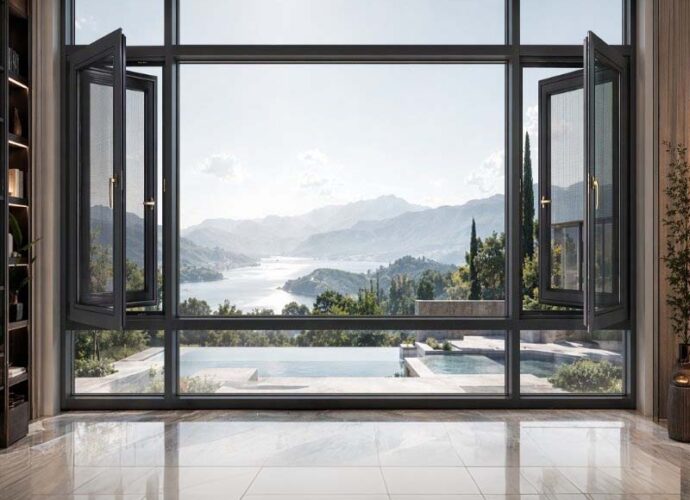
European-style dual-action windows featuring 3-seal continuous compression, multi-cavity 34mm PA66 thermal breaks, and triple Low-E argon-filled glass. Ideal for high-rise residential projects in cold climate zones requiring inward tilt ventilation and air-tight seals.
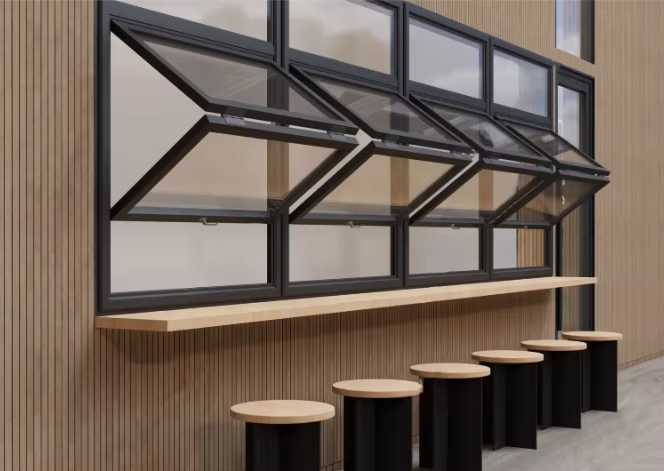
Heavy-duty thermal break sliding systems engineered with drop-down weather-sealing gaskets. Eliminates air infiltration inherent in standard sliders, delivering superior draft exclusion and smooth rolling operation under heavy snow loads.
Multi-panel thermal break folding windows combining dual-pane or triple-pane acoustic Low-E glass with heavy-duty thermal hinges. Provides 35 dB noise reduction and complete thermal barrier protection when closed against cold winds.
12.0 (Matched with PA66 for dimensional stability)
Service Life in Sub-Zero Zones
15–20 Years
10–15 Years (Brittle failure risk)
15–25 Years (High maintenance)
50+ Years (Zero structural degradation)
Compliance & Test Approvals
Non-compliant for cold codes
Basic residential codes
Historical / Residential
CE, NFRC, CSA, AS 2047, ISO 9001
Engineering Insight: Novor Front Door Technology Co., Ltd. specifies high-density Technoform PA66GF25 thermal insulation strips filled with polyurethane insulation foam inside frame cavities, eliminating convection loops and radiation losses within the profile frame.
B2B Market Insights
Future Sourcing & Procurement Trends for Cold Climate Windows
Key industry developments shaping commercial procurement strategies across North America, Northern Europe, and cold climate development projects.
Trend 01
Mandatory Net-Zero & Passive House Standards
Governments across Canada (BC Energy Step Code Level 4/5), North America (Title 24 & IECC 2024 updates), and Europe (EPBD directive) are enforcing maximum window assembly U-factors of $1.0 \text{ W/m}^2\text{K}$. Importers are replacing standard double glazing with factory-certified triple-pane Low-E assemblies containing Argon or Krypton gas.
Trend 02
Single Envelope Supplier Consolidation
Developers are moving away from fragmented sourcing. Buying cold climate windows, entrance doors, cast aluminum garage units, and fire doors from multiple factories increases lead times and coordination errors. Leading contractors now mandate single-source suppliers like Novor Front Door Technology Co., Ltd. for consolidated engineering and single-container freight logistics.
Trend 03
Modular & Pre-Furred Frame Integration
Cold climate builders require windows pre-engineered for rapid installation into heavy timber studs, ICF (Insulated Concrete Forms), and steel stud framing. Windows must include factory-applied nail fins, customized sub-head flashing grooves, and jamb extenders (such as 4-9/16" and 6-9/16" profiles) to reduce expensive job site labor.
Fenestration Innovation
Next-Generation Technology Trends in Cold Climate Window Manufacturing
Technological breakthroughs integrated into Novor's OEM/ODM production lines for severe weather performance.
Advanced Material Innovations & Smart Glazing
The cold climate window industry is undergoing a technological revolution driven by materials science. At Novor Front Door Technology Co., Ltd., our R&D team incorporates these innovations into custom architectural window designs:
Vacuum Insulated Glass (VIG) Integration: Ultra-thin 8.3mm VIG units achieve thermal performance equivalent to $100\text{mm}$ of solid foam insulation ($U \le 0.6 \text{ W/m}^2\text{K}$), drastically reducing total frame depth while delivering maximum visual transparency.
Aerogel Cavity Infill: Micro-porous aerogel insulation injected directly into aluminum multi-cavity profiles blocks radiant and conductive heat transfer inside the extrusions.
Warm-Edge Structural Silicone Spacers: Replacing cold conductive aluminum glass spacers with stainless steel composite or polymer warm-edge spacers reduces perimeter glass U-values by up to 15%.
Super-Hydrophobic Anti-Icing Coatings: Nanotech glass treatments prevent ice crystal adhesion, ensuring clear visibility and effortless cleaning during heavy frost cycles.
See how our engineered thermal break windows deliver long-term efficiency across high-latitude regions.
Calgary, Alberta, Canada
105A School Crescent SW Commercial Renovation
A multi-story commercial and residential development in Calgary required full fenestration retrofitting capable of withstanding severe Alberta winters ($-35^\circ\text{C}$). Novor Front Door Technology Co., Ltd. engineered custom 75 series thermal break casement windows paired with 45-minute UL-listed fire rated doors and triple Low-E glass assemblies.
1. How do aluminum windows prevent thermal bridging in -30°C climates?
Thermal bridging is prevented by physically separating the interior and exterior aluminum profiles using structural Polyamide PA66GF25 strips. This non-conductive barrier stops cold from transferring indoors. Novor further enhances frame insulation by filling interior cavities with high-density expanded polyurethane foam, achieving frame U-factors suitable for extreme sub-zero weather.
2. What U-factor and SHGC ratings should I specify for cold region building codes?
In cold climates (IECC Climate Zones 5 through 8, including Canada and Northern US), codes typically require a total window assembly U-factor of $\le 1.1 \text{ W/m}^2\text{K}$ ($\le 0.20 \text{ BTU/h}\cdot\text{ft}^2\cdot^\circ\text{F}$). For passive heating, specify a higher Solar Heat Gain Coefficient ($\text{SHGC} \ge 0.35 - 0.45$) on south-facing elevations to maximize free solar heat gains during winter months.
3. Why is condensation resistance (CRF) critical for cold climate window sourcing?
When interior warm air hits a cold frame surface, water droplets condense, leading to mold growth, dry rot on surrounding framing, and aesthetic ruin. A high Condensation Resistance Factor (CRF > 70) ensures that the interior frame surface temperature remains well above the dew point, even during severe outdoor freezes and elevated indoor relative humidity.
4. What glazing combination yields the highest energy efficiency for winter conditions?
We recommend a triple-pane IGU consisting of: 4mm Low-E Glass + 14mm 90% Argon Gas with Warm-Edge Spacer + 4mm Clear Glass + 14mm Argon Gas + 4mm Low-E Glass. This configuration achieves exceptional thermal resistance while maintaining crystal-clear visual clarity.
5. How does Novor Front Door Technology Co., Ltd. verify window structural performance against severe wind and snow loads?
Our profile extrusions utilize prime 6063-T5 high-tensile aluminum alloy with wall thicknesses between 1.8mm and 2.2mm. Every batch undergoes structural testing per ASTM E330 standards to resist positive and negative wind pressures up to 5000 Pa, ensuring sashes do not deform or leak under heavy snow loads or blizzard force winds.
6. Can you supply complete OEM window packages pre-fitted with wood jamb extensions and nail fins?
Yes. We specialize in ODM/OEM customization for North American and European installation practices. We supply integrated nailing flanges, brick-mould snaps, and sub-frame jamb extensions configured to match 4-9/16" or 6-9/16" wall framing, significantly speeding up job site installation.
7. What certifications are provided with Novor window exports?
Our window systems are tested to CE, NFRC, CSA, AS 2047, and ISO 9001 quality standards. Third-party factory audits and certified test documentation from TÜV AUSTRIA and Bureau Veritas are attached to each batch quotation for effortless municipal plan approvals.
8. What is the typical lead time and export packaging standard for container orders?
Standard lead time is 15 to 30 days after shop drawing and sample sign-off. Windows are protected with scratch-resistant film, rubber corner shields, heat-shrink wrap, and packed in reinforced export-grade wooden cases to guarantee damage-free ocean transit.
Enterprise Strengths & E-E-A-T Guarantee
Direct Factory Manufacturing Excellence: 3 Specialized Industrial Hubs
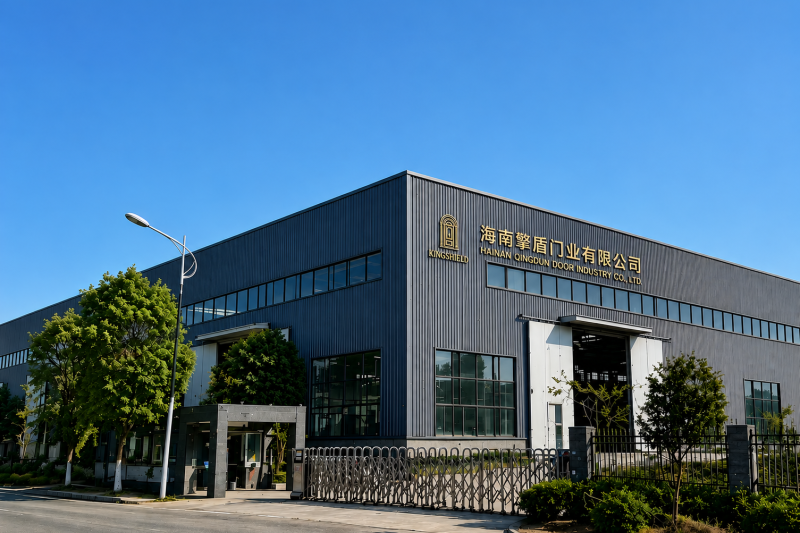
Novor Front Door Technology Co., Ltd. operates three specialized manufacturing centers across China to provide dedicated expertise for every building envelope component:
Foshan, Guangdong: High-performance thermal break aluminum window and sliding door production line.
Yongkang, Zhejiang: Cast aluminum entry doors and luxury villa entrance security systems.
Haikou, Hainan: HQ export management office, steel security door and commercial fire-rated door plant.
By combining specialized profile extrusions, automated glass insulating lines, and stringent internal QA protocols under ISO 9001 supervision, we ensure that every unit shipped delivers verified performance, flawless aesthetics, and a 5-year structural warranty.
Request Your Cold Climate Window Quotation & Thermal Calculations
Send us your project architectural elevations or window schedule. Our engineering team will produce shop drawings, U-factor modeling reports, and competitive factory-direct pricing within 24 hours.