0%

Choosing a Modern Aluminum Entry Door in 2026 involves more than following a stylish showroom trend. Homeowners now compare thermal performance, security hardware, weather resistance, accessibility, maintenance, and architectural character. A narrow black frame may look impressive, yet it can disappoint when poor insulation creates condensation beside the threshold.

This guide examines the leading modern types expected to shape the 2026 market. These include thermally broken aluminum doors, oversized pivot doors, slim-frame glass doors, flush-panel systems, and integrated smart-entry designs. Each option creates a different arrival experience. A pivot door feels monumental. A sliding door saves circulation space. A flush panel creates a quiet, almost seamless façade.

Architect Ludwig Mies van der Rohe famously said, “Less is more.” That principle still influences contemporary aluminum entry design. However, less visual detail does not always mean better performance. A minimal frame may require stronger glass, precise installation, and careful drainage planning. Small technical omissions can become expensive problems.

This overview draws on architectural design practice, manufacturer specifications, and practical installation considerations. It also recognizes an uncomfortable truth: product labels can sound more advanced than the products themselves. Ratings, certifications, warranties, and tested assemblies deserve closer attention. The best Modern Aluminum Entry Door is not simply the boldest model. It should suit the climate, wall construction, daily traffic, and security expectations of the property. Trends change quickly. Good judgment lasts longer.
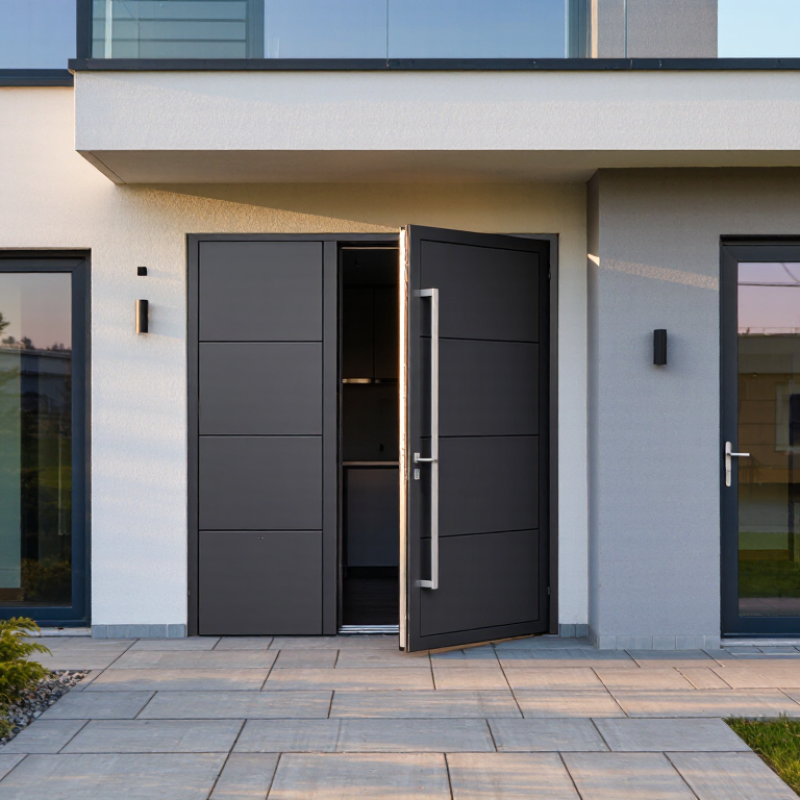
What Are the 2026 Top Modern Aluminum Entry Door Types?

What Defines a Modern Aluminum Entry Door in 2026?

In 2026, modern aluminum entry doors are defined less by appearance than by controlled performance. A narrow profile, flush threshold, and large glass panel create today’s visual language. Yet the frame should include a continuous thermal break, durable gaskets, and tested drainage paths. The U.S. Department of Energy reports that windows can represent 25–30% of residential heating and cooling energy use. This figure concerns windows, not doors, but it explains why glazed entry systems need serious thermal design. Details matter.

Top types include thermally broken single doors, oversized pivot doors, and paired doors with insulated sidelights. Low-E double or triple glazing can reduce radiant heat transfer. Laminated glass can also improve acoustic comfort and impact resistance. The NAFS and AAMA/WDMA/CSA 101/I.S.2/A440 standards evaluate air, water, structural, and operational performance. A modern door should disclose these ratings. Slim is not enough. I have seen beautiful doors fail at the sill because installers ignored site drainage. That is not only a design failure.

Material responsibility also shapes 2026 decisions. International Aluminium Institute data indicates that recycled aluminum requires about 5% of the energy used for primary aluminum production. An Environmental Product Declaration can help verify recycled content and manufacturing impacts. Still, a low-carbon claim without traceable sourcing remains weak. The honest specification includes thermal transmittance, hardware cycle testing, and maintenance access. Some projects still overvalue minimal sightlines. I would question that choice.

Which Aluminum Entry Door Styles Are Leading in 2026?

In 2026, slim-frame aluminum entry doors lead modern residential design. Their narrow profiles create wider glass views and cleaner façades. Pivot doors are also gaining attention, especially in homes with tall entrances and generous foyers. They open smoothly on central hinges and create a strong architectural statement.

Large glass panels remain popular. Clear, frosted, fluted, and tinted glass provide different levels of privacy. Flush aluminum doors suit minimalist homes with simple walls and concealed hardware. For colder or hotter regions, thermally broken frames are increasingly important. They reduce heat transfer and help limit condensation near the doorway.

Tips: Check the frame’s thermal-break design, glass specification, drainage path, and hardware rating. Ask for installation details, not only appearance. A beautiful door can perform poorly when the sill is incorrectly sealed.

Practical experience shows that style should follow daily use. A wide pivot door may require more clearance than expected. A dark finish can also show dust, fingerprints, and scratches more clearly. I once underestimated how strongly afternoon sunlight affected a large glazed entrance. External shading would have improved comfort. Before ordering, measure furniture routes, opening direction, threshold height, and nearby walls. Reliable suppliers should provide performance data and clear maintenance instructions. Seals, hinges, and finishes still need periodic inspection.

What Are the 2026 Top Modern Aluminum Entry Door Types?

Which Aluminum Entry Door Styles Are Leading in 2026?

Comparison based on commonly available residential aluminum door configurations, standard sizing, thermal performance, glazing options, and current modern-design preferences. Performance varies by construction, glazing, hardware, and local code requirements.
Rank Modern Aluminum Entry Door Type Typical Configuration Common Door Sizes Typical Glazing Thermal Performance Range Design Advantages Best Suited For
1 Thermally Broken Flush Panel Door Single or double insulated aluminum panel with concealed or minimal trim 30–42 in. wide × 80–96 in. high Solid panel; optional narrow vision panel or side-lite Approximately 0.15–0.35 Btu/h·ft²·°F U-factor, depending on system and infill Clean geometric appearance, strong privacy, low visual clutter, and excellent compatibility with minimalist façades Contemporary houses, urban apartments, and high-privacy entrances
2 Slim-Frame Full-Glass Aluminum Door Narrow aluminum perimeter frame with a large insulated glass panel 30–42 in. wide × 80–96 in. high Double-glazed or triple-glazed low-emissivity safety glass Approximately 0.20–0.40 Btu/h·ft²·°F U-factor with insulated low-e glazing Maximizes daylight, creates a light architectural feel, and visually connects interior and exterior spaces Bright entry halls, modern villas, and homes with landscaped front elevations
3 Pivot Aluminum Entry Door Oversized slab supported by concealed top and bottom pivot hardware 36–60 in. wide × 84–120 in. high Solid panel, vertical glass insert, or full-height insulated glazing Approximately 0.20–0.40 Btu/h·ft²·°F U-factor, depending on slab and glass area Strong architectural statement, generous proportions, and flexible opening direction Large custom residences, double-height foyers, and statement entrances
4 Aluminum Door with Vertical Glass Sidelites Insulated aluminum door slab paired with one or two narrow fixed sidelites Door: 30–42 in. wide × 80–96 in. high; sidelites commonly 12–24 in. wide Low-e double glazing or laminated safety glass Approximately 0.20–0.40 Btu/h·ft²·°F U-factor for the glazed assembly Adds daylight and visual width without the footprint of a fully glazed entrance system Narrow lots, remodels, and entrances requiring more natural light
5 Double Aluminum Entry Door Two independently hinged leaves, usually equal-width or asymmetrical 60–84 in. total width × 80–96 in. high Solid panels, vertical lites, or full-height insulated glass Approximately 0.20–0.40 Btu/h·ft²·°F U-factor, subject to meeting-stile and glazing design Wide clear opening, balanced façade proportions, and convenient furniture access Wide foyers, luxury residences, and accessible or high-traffic entrances
6 Textured or Wood-Look Aluminum Door Thermally broken aluminum slab with wood-grain or textured architectural finish 30–42 in. wide × 80–96 in. high Solid panel, narrow lite, or insulated decorative glass Approximately 0.15–0.35 Btu/h·ft²·°F U-factor for insulated panel designs Provides a warm material appearance while retaining aluminum’s dimensional stability and low maintenance Warm-modern, Scandinavian, and mixed-material architectural styles
7 Recessed-Panel or Linear-Groove Aluminum Door Flat aluminum slab with horizontal, vertical, or asymmetrical recessed detailing 30–42 in. wide × 80–96 in. high Usually solid; optional narrow horizontal or vertical lite Approximately 0.15–0.35 Btu/h·ft²·°F U-factor for insulated constructions Adds shadow lines and texture while preserving a restrained contemporary profile Modern farmhouses, industrial-inspired homes, and façades using linear patterns
Key 2026 selection criteria: thermally broken frames, low-e safety glazing, concealed hardware, oversized proportions, narrow sightlines, durable powder-coated finishes, improved weather sealing, and designs that balance daylight with privacy.

How Do Materials and Glass Options Shape Door Performance?

Modern aluminum entry doors perform best when frame design and glass specifications work together. A thermal break separates inner and outer aluminum layers, reducing conductive heat transfer. Without it, the frame can feel cold on winter mornings or hot under direct sun.

Glass often shapes comfort more than homeowners expect. The U.S. Department of Energy reports that windows can represent 25–30% of residential heating and cooling energy use. NFRC ratings provide useful evidence: a lower U-factor indicates better insulation, while a lower SHGC limits solar heat gain. Double glazing suits many climates, but triple glazing may improve comfort in colder regions. Low-emissivity coatings can also reduce radiant heat loss. However, the darkest glass is not always the most efficient choice. It may reduce daylight and alter interior colors. Real homes are less predictable than laboratory tests.

Tips: Check the complete door assembly, not glass alone. Ask for U-factor, SHGC, air-leakage, and condensation-resistance data. Choose a thermally broken frame with insulated spacers and properly sealed corners. DOE guidance also stresses professional installation, because small gaps around the threshold can undermine expensive glazing. I would compare orientation, shade, and local weather before selecting the glass. A beautiful specification can still perform poorly when installation is rushed.

What Smart Features and Security Systems Are Available?

What Are the 2026 Top Modern Aluminum Entry Door Types?

Modern aluminum entry doors now support more than appearance and weather resistance. Thermally broken pivot doors, slim-frame hinged doors, and insulated sliding systems can accommodate smart locks, video doorbells, presence sensors, and concealed wiring. Field installers often prefer reinforced lock zones because thin door profiles leave little room for hardware errors. A small gap around the cylinder can affect alignment.

Statista Market Insights projected the global smart-home market to exceed 150 billion dollars in 2024, showing strong demand for connected residential products. Security systems are becoming more integrated. A practical setup may include fingerprint or keypad access, temporary digital codes, tamper alerts, motion detection, and indoor notification panels. NISTIR 8259A recommends secure passwords, software updates, data protection, and device access control for connected products. These details matter more than a dramatic specification sheet.

Parks Associates has reported that smart security adoption approaches half of U.S. internet households, although ownership does not guarantee effective protection. A camera facing the wrong angle is still a blind spot. Battery backup can keep entry controls active during short outages, while local storage may reduce dependence on unstable internet service. I would also question fully automated unlocking. Convenience is useful, but a manual key override and clear emergency access remain sensible. A beautiful aluminum door should feel quiet, solid, and predictable when technology fails.

How Should You Choose and Maintain a 2026 Aluminum Entry Door?

Choosing a 2026 aluminum entry door starts with climate, exposure, and daily use. A thermally broken frame is preferable because it reduces direct heat transfer through aluminum. For glass panels, compare U-factor and solar heat gain coefficient on the NFRC label. The U.S. Department of Energy notes that windows can cause 25–30% of residential heating and cooling energy use. A glazed entry door deserves similar attention.

Select insulated cores, continuous weatherstripping, and corrosion-resistant hardware for coastal or humid locations. Check the door’s air, water, and structural performance under AAMA/WDMA/CSA 101/I.S.2/A440 testing requirements. The 2024 IEA Global Status Report for Buildings and Construction reports that buildings use about 30% of global final energy. Small envelope weaknesses are not insignificant. A lower U-factor may help, but installation quality often decides the real result.

Maintenance should be simple and scheduled. Clean aluminum surfaces with mild soap and water every three to six months. Avoid abrasive pads, chlorine cleaners, and unapproved solvents. Inspect the bottom sweep after heavy rain. Look for cracked seals, loose hinges, water marks, or a latch that needs force. Lubricate moving hardware only with the manufacturer-approved product. Even careful inspection can miss frame movement. Recheck alignment after seasonal temperature changes, especially when the door scrapes the threshold or daylight appears around one corner.

FAQS

What defines a modern aluminum entry door in 2026?

Controlled performance matters more than appearance. Narrow frames, flush thresholds, large glass, thermal breaks, durable gaskets, and proper drainage are essential.

Why is a thermal break important?

It reduces heat transfer through the aluminum frame. This can improve indoor comfort and reduce condensation near the doorway. Slim is not enough.

Which door styles are popular in 2026?

Slim-frame single doors, oversized pivot doors, and paired doors with insulated sidelights are popular. Pivot doors need generous clearance.

What glass should homeowners consider?

Low-emissivity double or triple glazing can reduce radiant heat transfer. Laminated glass may improve sound control and impact resistance.

How can glass provide privacy?

Clear glass maximizes daylight. Frosted, fluted, and tinted glass offer more privacy. The right choice depends on street views and sunlight.

What performance details should buyers request?

Ask for air, water, structural, and operating performance ratings. Request thermal values, hardware cycle testing, drainage details, and maintenance instructions.

Why can installation affect door performance?

An attractive door may fail when the sill is poorly sealed. Site drainage, threshold height, and surrounding walls need careful review.

What practical measurements should be taken before ordering?

Measure the opening, furniture route, swing direction, threshold height, and nearby wall clearance. A wide pivot door may need more space than expected.

How should an aluminum entry door be maintained?

Inspect seals, hinges, drainage paths, and finishes periodically. Dark surfaces can reveal dust, fingerprints, and scratches quickly.

Is recycled aluminum always the better choice?

Recycled aluminum generally uses much less production energy. However, unsupported low-carbon claims deserve caution. Traceable sourcing is better.

Conclusion

In 2026, a Modern Aluminum Entry Door combines clean architectural design, strong performance, and practical technology. Popular styles include minimalist flush panels, slim-framed glass doors, pivot designs, and bold geometric configurations that suit contemporary homes and commercial spaces. Aluminum offers durability, corrosion resistance, and low maintenance, while thermal breaks improve insulation and energy efficiency. Glass choices such as frosted, tinted, laminated, or double-glazed panels can enhance privacy, daylight, sound control, and safety.

Smart features are also shaping the latest entry doors, including keyless access, mobile control, video doorbells, motion sensors, and integrated alarm connections. Strong multi-point locks, reinforced frames, and impact-resistant materials provide dependable protection without compromising appearance. When choosing a door, consider the building’s climate, entry size, ventilation needs, security requirements, and overall design. Regular cleaning, hardware inspection, seal checks, and prompt repair of surface or weatherproofing issues will help maintain its performance and appearance for many years.

Elowen

Elowen

Elowen is a professional marketing specialist dedicated to helping businesses understand products, industries, and customer needs through clear, practical, and insight-driven communication. With a strong understanding of the company’s product portfolio, market positioning, and service standards,......