0%

Choosing an Aluminum Front Door involves more than comparing colors, prices, and showroom photographs. The right design can improve curb appeal, security, insulation, and daily comfort. Yet every home has different needs. A narrow porch may suit a slim glazed door, while a dark contemporary entrance may need a bold pivot design.

Neil Ginger, CEO of Origin Global, has said, “A front door should feel secure, but it should also feel like part of the architecture.” That observation offers a practical starting point. A door must resist weather, frequent use, and forced entry attempts. It should also welcome visitors without making the entrance feel cold or overly commercial. Thermal breaks, multi-point locks, powder-coated finishes, and double glazing deserve close attention. Small details matter. Even the handle can change the whole experience.

This guide explores the top types of Aluminum Front Door, including hinged, pivot, sliding, glazed, and solid-panel options. Each style has useful strengths. Each also has compromises. Pivot doors can create drama, but they need sufficient wall space. Large glazed panels brighten an entrance, though privacy may become a concern. Solid doors feel substantial, but they can reduce natural light. Product labels can sound impressive, sometimes too impressive. Check tested performance, installation quality, drainage design, and warranty terms before deciding. A beautiful door can still disappoint if the frame is poorly fitted. The best choice balances appearance, protection, maintenance, and the character of the home.
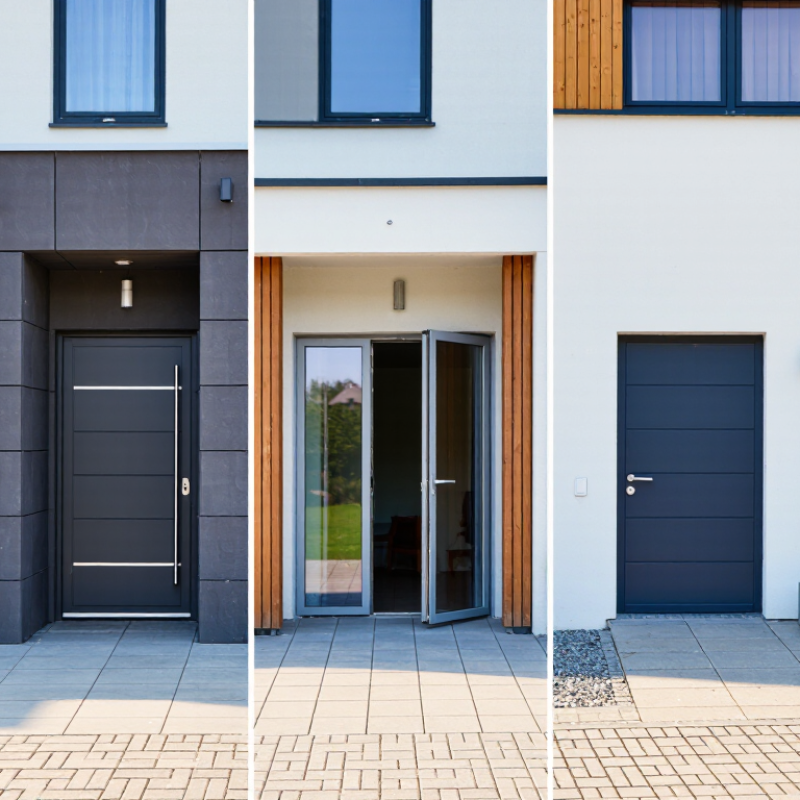
What Are the Top Types of Aluminum Front Doors?

Aluminum Front Door Styles and Their Defining Features

Aluminum front doors are no longer limited to plain, narrow entrances. The most common style is the single hinged door, valued for reliable sealing and familiar operation. Its defining features include a solid aluminum slab, insulated core, adjustable hinges, and either a flush or framed glass panel. In site inspections, I have found that a well-fitted single door often performs better than a fashionable design with weak weatherstripping.

Double aluminum doors create a wider, more formal entrance. They suit large foyers and can improve furniture access, but the meeting point between panels needs careful adjustment. Pivot doors offer a dramatic appearance, with a central or offset pivot replacing conventional side hinges. They can carry larger panels, although their bottom seal may require more maintenance. Sliding aluminum doors provide clean lines and useful daylight, yet they usually need stronger drainage and precise track installation for exposed entrances.

Thermal-break aluminum doors deserve particular attention. Their polyamide separator reduces direct heat transfer through the frame. The U.S. Department of Energy reports that windows and doors can contribute substantially to residential heating and cooling losses, especially when glazing and seals perform poorly. NFRC ratings help compare U-factor, solar heat gain, and visible transmittance instead of relying on appearance alone. The International Energy Agency’s 2023 buildings report also identifies buildings as responsible for about 30% of global energy demand. That makes frame insulation a practical design issue, not just a cosmetic choice. I still think oversized glass is sometimes overused. Without low-emissivity glazing, shading, and a properly sealed threshold, it can create glare and uncomfortable indoor temperatures.

Single, Double, and Pivot Aluminum Door Designs

Single aluminum front doors suit compact entrances and most standard homes. Their narrow profile leaves more wall space for sidelights or planters. A well-made frame should include a thermal break, weather seals, and a secure multi-point lock. In practice, I check the threshold carefully because poor drainage can cause water stains after heavy rain. These doors are simple, but simple does not mean effortless.

Double aluminum doors create a wider, more welcoming entrance. They work well for large foyers, moving furniture, or homes with strong architectural symmetry. Equal panels look balanced, while an unequal pair gives one active door easier daily access. The meeting stile needs accurate alignment. Otherwise, even a small gap can reduce comfort and security. I prefer concealed adjustment points, although they can make future servicing less convenient.

Pivot aluminum doors offer a dramatic alternative for tall façades and modern entryways. Their central or offset pivot hardware allows broad panels to open smoothly with less visible framing. Large glass areas can brighten a dark hallway, but they also increase heat gain and privacy concerns. Low-emissivity glass, insulated panels, and an overhead canopy can improve performance. Still, pivot systems require careful structural planning. A heavy door may feel impressive at first, yet poor installation can produce rubbing, uneven gaps, or difficult closing. Reviewing wind exposure and local building requirements before fabrication is not glamorous, but it prevents expensive corrections.

Glass Options for Aluminum Front Entry Doors

Glass can make an aluminum front door feel brighter and more welcoming, but the right choice depends on privacy, daylight, and exposure. Clear glass brings sunlight into a shaded entryway and keeps the view open. It also makes indoor details easier to see from outside. Frosted or patterned glass softens that view while still admitting light.

Stand near the door at dusk to check privacy; samples can look different in a lit showroom. A useful test.

For improved insulation, ask about double glazing and low-emissivity coatings, which help reduce heat transfer. In colder climates, well-sealed insulated glass can also help limit condensation, though installation and indoor humidity matter.

Laminated glass has an interlayer that holds pieces together if the glass breaks; it is not unbreakable. That distinction matters.

South- or west-facing entrances may benefit from solar-control glass to reduce glare and heat gain. Consider how the glass works with the door’s thermal break and weather seals, too.

I would not choose solely by appearance: a beautiful panel can feel less practical if it needs frequent cleaning or exposes the entry at night. Compare actual glass samples in daylight before deciding.

Aluminum Finishes, Colors, and Hardware Choices

An aluminum front door can look crisp and modern, but its finish affects more than appearance. Powder-coated surfaces offer a broad choice of colors and usually need only routine cleaning with mild soap and water. For a coastal or high-sun location, ask the supplier about finish testing and care recommendations. Exposure conditions matter.

Matte charcoal can soften glare and pair well with pale stone, while warm bronze or muted green can make a plain entry feel more welcoming. A textured finish may also disguise small marks better than a glossy one, though dust can settle into its surface. Bring color samples outdoors; indoor lighting can be misleading. I once thought a deep gray would read as black, but daylight changed it considerably.

Hardware should suit both the door’s style and daily use. A long pull handle creates a clean, contemporary line, while a compact lever can feel more familiar. Choose a finish that works with nearby lighting and house numbers, rather than matching every metal exactly. Check that the lock, hinges, and handle are compatible with the door system, and ask how exposed hardware should be maintained. Small details count. One finish may look perfect in a sample and feel too cold across a full-size door.

What Are the Top Types of Aluminum Front Doors? - Aluminum Finishes, Colors, and Hardware Choices

Door Type Typical Appearance Common Aluminum Finishes Popular Color Choices Suitable Hardware Key Considerations
Solid-panel aluminum door Mostly opaque panels with a clean, contemporary profile Powder-coated, anodized, or wood-effect finish Black, white, charcoal, bronze, or wood-effect tones Lever handle, pull handle, multipoint lock, and concealed hinges Offers a private entrance appearance; panel construction and thermal performance vary by door system.
Full-glass aluminum door Large glazed area framed by slim aluminum profiles Powder-coated or anodized frame Black, silver, dark grey, or white Long pull handle, multipoint lock, and security-rated cylinder Brings in daylight; choose suitable safety glazing and consider privacy, orientation, and solar gain.
Partially glazed aluminum door Solid lower panel combined with one or more glazed sections Powder-coated, anodized, or textured finish Anthracite grey, black, white, or muted green Lever handle, pull handle, multipoint lock, and optional letter plate Balances daylight and privacy; glazing layout and glass specification affect appearance and performance.
Aluminum door with decorative glazing Glazed panels with patterned, obscure, or textured glass Powder-coated or anodized frame Black, bronze, silver, or custom architectural colors Lever handle, escutcheon, multipoint lock, and matching hinges Obscure glass can improve visual privacy while admitting light; decorative patterns may require more frequent cleaning.
Double-leaf aluminum entrance door Two coordinated door leaves for a broad entrance Powder-coated, anodized, or wood-effect finish Black, charcoal, bronze, white, or complementary two-tone colors Pull handles, multipoint locking, flush bolts on the inactive leaf, and heavy-duty hinges Creates a wide opening; check clear opening width, threshold design, and the locking arrangement for both leaves.
Pivot-style aluminum front door Large door leaf rotating on a pivot rather than conventional side hinges Powder-coated, anodized, or textured finish Black, dark grey, bronze, or contrasting accent colors Pivot set, flush pull, concealed closer, and compatible locking hardware Can suit oversized designs; requires suitable structural support, accurate installation, and careful weather-seal detailing.
Wood-effect aluminum door Aluminum construction with a finish designed to resemble wood grain Wood-effect coating or foil finish, depending on the door system Oak, walnut, warm brown, or weathered wood tones Black, bronze, or stainless-steel lever and pull handles; multipoint lock Provides a wood-inspired look with aluminum construction; color and grain vary by finish process and sample.

How to Select the Right Aluminum Front Door Type

How to Select the Right Aluminum Front Door Type

Start with the entrance itself. Measure the opening, including its height, width, and depth, and note whether the door swings inward or outward. A hinged panel suits many standard homes. A pivot door can create a wider, modern-looking entry, but it needs careful planning for clearance and hardware. Sliding systems are less common for front entrances and may not offer the same practical feel in every layout. Small details matter.

Then match the door’s construction to your weather and daily use. In a cold or hot climate, ask whether the frame includes a thermal break, which helps reduce heat transfer. For glazed doors, consider privacy, daylight, and the glass specification—not just how clear it looks in a showroom. A narrow sidelight can brighten a dim hallway without making the whole door transparent. Check the threshold, seals, and locking points, too; a well-chosen panel can still perform poorly if these details are overlooked.

Think about upkeep and the people using the entrance. A large, heavy door may look impressive, but it can be awkward for children or anyone carrying groceries. Compare finishes against nearby trim, and ask how easily scratches or marks can be repaired. There is no perfect type. I’d revisit my choice after seeing the sample beside the actual entry, because showroom lighting can be misleading.

Top Types of Aluminum Front Doors

Panel counts show common configurations, not fixed limits. Single and pivot doors typically use one panel; double-entry and sliding doors commonly use two; bi-fold systems often use multiple panels. Choose a style based on available space, desired opening width, and how the door will operate.

FAQS

What is the most practical aluminum front door style?

A single hinged door is usually practical. It seals reliably and feels familiar. Adjustable hinges help correct minor alignment issues.

When should homeowners choose double aluminum doors?

Choose double doors for wide foyers or easier furniture movement. The center meeting point needs careful adjustment. Small gaps can cause drafts.

What makes pivot doors different?

Pivot doors rotate on central or offset pivots. They support large panels and create a dramatic entrance. The bottom seal needs regular attention.

Are sliding aluminum doors suitable for exposed entrances?

They provide clean lines and useful daylight. However, exposed locations need strong drainage and precise track installation. Water can become troublesome.

Why are thermal-break aluminum doors important?

A polyamide separator reduces heat transfer through the frame. This can improve indoor comfort and reduce heating or cooling losses.

What should homeowners check when choosing glass?

Check insulation ratings, solar heat gain, and visible light transmission. Low-emissivity glass and exterior shading can reduce glare.A large glass panel is not always better.

Which aluminum finish works well for a sunny or coastal home?

Ask about finish testing and care requirements for intense sun or salt air. Powder-coated surfaces offer many colors and simple cleaning.

How should homeowners choose door colors and hardware?

View color samples outdoors because indoor lighting can mislead. Matte charcoal can reduce glare, while textured finishes hide small marks.

What hardware details matter most?

Confirm that the lock, handle, and hinges match the door system. A long pull handle looks modern, but a compact lever feels familiar.A perfect sample may feel different full-size.

Conclusion

Choosing an Aluminum Front Door involves balancing appearance, function, and the needs of your entryway. Popular styles range from clean, modern panels to designs with decorative details, while single, double, and pivot configurations offer different ways to suit an opening and create a sense of arrival. The right layout depends on available space, how the door will be used, and the visual effect you want.

Glass options can bring in daylight and vary in privacy, from clear panes to more obscured finishes. Aluminum finishes, colors, and hardware provide further opportunities to coordinate the door with the home’s exterior and interior. Consider how each choice works together, as well as practical priorities such as ease of operation, light, and privacy. Comparing these features will help you select a door type that feels cohesive and serves your everyday needs.

Elowen

Elowen

Elowen is a professional marketing specialist dedicated to helping businesses understand products, industries, and customer needs through clear, practical, and insight-driven communication. With a strong understanding of the company’s product portfolio, market positioning, and service standards,......