Featured Thermal Break Aluminum Entry Systems
Engineered for extreme atmospheric resilience, structural stability, and energy conservation across North American, European, and Australian architectural projects.
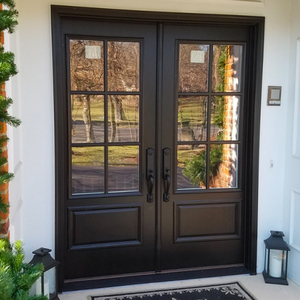
Custom Villa Main Entrance Door Aluminum Casement Double Tempered Glass
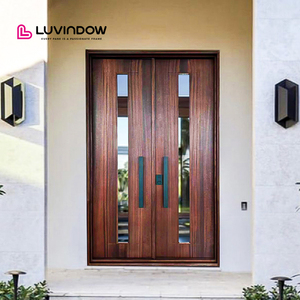
USA Modern Design Exterior Solid Wood & Pivot Aluminum Entry Door
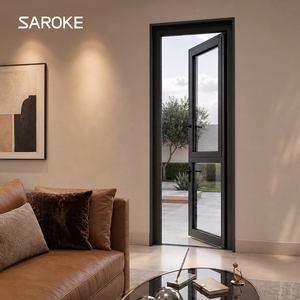
American Standard Black Metal Exterior Thermal Break Patio Entry Door
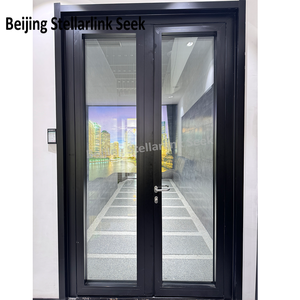
Extreme Cold Climate Triple Glazed Passive Thermal Break Entry Door
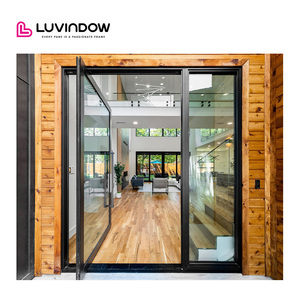
Modern Glass Front Villa Pivot Door with Thermal Insulation Core
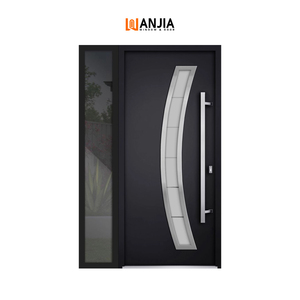
Soundproof Thermal Break Double Glazed Exterior Front Entrance Door
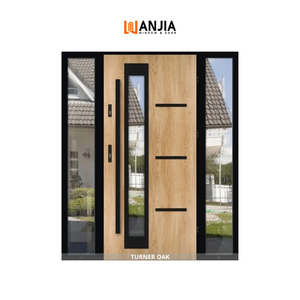
Heavy Duty Thermal Break Aluminum Pivot Door with Sidelights
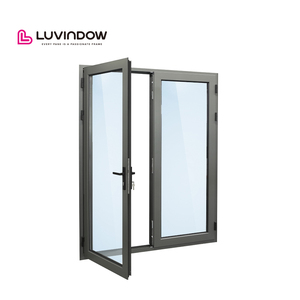
Thermal Break Low-E Hinged Double French Doors for Luxury Hotels
1. Industrial Architecture & Material Engineering of Thermal Break Aluminum Doors
Thermal break aluminum entry doors represent the pinnacle of modern facade engineering, bridging architectural aesthetics with stringent thermodynamic efficiency requirements. In standard aluminum doors, aluminum's high thermal conductivity (approximately 160–220 W/m·K) creates an uninhibited thermal bridge, leading to rapid heat loss in winter, solar heat gain in summer, and internal condensation. Certified thermal break entry door factories overcome this physical limitation by inserting a low-conductive polyamide strip (PA66-GF25, glass fiber reinforced nylon) between the inner and outer aluminum extrusions.
Our OEM manufacturing lines utilize primary 6063-T5 and 6063-T6 architectural grade aluminum extrusions, engineered to wall thicknesses between 2.0mm and 3.0mm. This delivers structural rigidity capable of withstanding wind loads exceeding 5,000 Pa (DP60 to DP100 ratings), making them suitable for high-rise commercial entryways and luxury coastal residential villas.
Information Gain Key Insight: The structural integration of 24mm to 34mm PA66-GF25 polyamide thermal barriers reduces overall system thermal conductivity by over 60%, allowing aluminum entrance assemblies to achieve U-factors as low as 0.8 to 1.2 W/m²K (R-values > 4.7), satisfying Passive House standards across North America and Northern Europe.
Extrusion Alloy & Surface Treatment Specification Matrix
| Parameter / Feature | Standard Non-Thermal Door | Advanced Thermal Break System | Novor Factory Premium OEM |
|---|---|---|---|
| Aluminum Alloy Grade | Recycled / 6063-T5 (1.4mm) | Primary 6063-T5 / T6 (2.0mm) | Primary High-Tensile 6063-T6 (2.5mm–3.0mm) |
| Thermal Barrier Material | None (Solid Aluminum) | PVC / Standard Nylon Strip | Polyamide PA66-GF25 (24mm–34mm Multi-Cavity) |
| System U-Value (Thermal) | > 4.5 W/m²K | 1.8 – 2.4 W/m²K | 0.8 – 1.2 W/m²K (Triple Low-E + Argon) |
| Acoustic Isolation (STC) | 22 – 26 dB | 32 – 36 dB | 38 – 45 dB (Multi-Layer Laminated IGU) |
| Surface Durability | Standard Powder Coat (5 yrs) | AkzoNobel Powder Coat (10 yrs) | Qualicoat Class 2 PVDF Fluorocarbon (20+ yrs) |
2. Global Regulatory Compliance & Certification Engineering (CE, NFRC, AS2047)
For international buyers, developers, and door importers, securing certified structural components is critical for building code approval and site inspection pass rates. Manufacturers operating certified thermal break aluminum door facilities adhere to regional compliance frameworks:
- European Union (CE Marking - EN 14351-1): Mandatory testing for air permeability (EN 12207 Class 4), watertightness (EN 12208 Class 9A), wind load resistance (EN 12210 Class C5), and acoustic performance.
- United States & Canada (NFRC & AAMA Standards): Thermal rating verification under NFRC 100/200/400 (U-factor, SHGC, Visible Transmittance) and structural air/water/wind pressure testing per AAMA/WDMA/CSA 101/I.S.2/A440. High-Velocity Hurricane Zone (HVHZ) impact certification per Florida Building Code (TAS 201/202/203).
- Australia & New Zealand (AS 2047 & AS 1288): Compliance governing window and external door structural capacity, deflection under load, water penetration resistance (up to 450 Pa), and safety glazing standards.
Factory Compliance Guarantee: Novor Front Door Technology Co., Ltd. conducts third-party verification via TÜV AUSTRIA, Bureau Veritas, and Intertek. Complete certified batch test reports are supplied alongside shop drawings for every procurement order.
Novor Factory Manufacturing & Supply Chain Ecosystem
Integrated multi-plant manufacturing setup combining raw aluminum extrusion processing, automated thermal break insertion, luxury casting, and custom export crating.
Foshan Extrusion Hub
Dedicated 35,000 m² facility located in Guangdong's aluminum cluster. Operates 12 automated extrusion presses, precision CNC machining centers, and automated PA66 thermal barrier crimping lines.
Yongkang Villa Entry Plant
Specialized in heavy-duty cast aluminum doors, oversized pivot entries, and hand-finished architectural villa front doors inside China's hardware manufacturing epicenter.
Haikou HQ & Export Hub
Oversees international B2B logistics, BIM/CAD shop drawing engineering, steel security door production, and strict pre-shipment quality assurance testing.
3. Future Procurement Trends in Thermal Break Aluminum Entry Doors (2025–2030)
The global demand for high-performance entrance door assemblies is undergoing a structural transition driven by net-zero building regulations, smart home integration, and modern architectural preferences for grand openings. Key procurement shifts include:
A. Shift Toward Oversized Pivot Doors with Hidden Floor Springs
Architects are increasingly specifying single-leaf pivot entry doors exceeding 1,500mm in width and 3,500mm in height. Traditional butt hinges cannot support the immense cantilever forces of heavy glazed or cast panels (often weighing 300kg to 500kg). Certified factories now integrate heavy-duty hydraulic floor pivots (such as FritsJurgens or Dormakaba systems) directly inside thermal break frames, allowing effortless 360-degree rotation with zero top-jamb deflection.
B. Smart Access Control Integration & Motorized Multi-Point Locking
Modern entry door manufacturing extends beyond metalworking to electronic systems integration. Factory-installed concealed biometric fingerprint readers, 3D facial recognition modules, and IoT-connected motorized multi-point locks (e.g., GU, Winkhaus, Fuhr) are now pre-wired into the thermal break profiles during fabrication, eliminating site modification costs.
C. Low-Carbon Recycled Aluminum Sourcing (ESG Compliance)
Institutional developers across Western Europe and North America now require environmental product declarations (EPDs) for entrance door procurement. Factories are shifting to low-carbon primary aluminum billets produced using hydroelectric power (carbon intensity < 4.0 kg CO2/kg Al) and incorporating 30%+ post-consumer recycled aluminum alloys.
4. Essential Technical Checklist for B2B Importers & Contractors
When evaluating thermal break aluminum door manufacturers for wholesale orders or commercial contracts, verify the following engineering parameters prior to placing production deposits:
- Profile Thickness vs. Opening Dimensions: Ensure 2.0mm minimum wall thickness for standard hinged doors and 2.5mm–3.0mm for pivot doors over 2,800mm in height to prevent wind pressure deformation.
- Polyamide Strip Quality: Insist on genuine PA66-GF25 (Polyamide 66 reinforced with 25% glass fiber). Reject cheaper PVC or low-density nylon substitutes which embrittle under UV exposure and thermal cycles.
- Glass Unit Fabrication: Insulated glass units (IGUs) must feature warm-edge composite spacers (Swisspacer or Technoform) and dual-seal silicone to prevent gas leakage. Fully tempered safety glass must comply with ANSI Z97.1 or EN 12150.
- Hardware & Gasket Material: Weather seals must utilize peroxide-cured EPDM or TPE gaskets. Cheap PVC seals harden, crack, and shrink over time, ruining air and water tightness ratings.
Frequently Asked Questions by Technical Buyers
In-depth answers addressing thermal performance, code certification, OEM lead times, and global shipping logistics.
Which international certifications do your thermal break aluminum entry doors hold?
What is the difference between PA66 thermal break strips and lower-cost PVC insulation inserts?
What is the typical production lead time for custom OEM/ODM door packages?
Can your factory build entry doors tailored to specific North American or European framing sizes?
How are oversized aluminum doors packaged to prevent damage during long-distance ocean transport?
What warranty protection is provided on aluminum entry door assemblies?
Ready to Engineer Your Project's Entrance Doors?
Submit your schedule of openings, architectural elevation drawings, or OEM customization specs. Our technical engineering team will deliver shop drawings and factory-direct pricing within 24 hours.