High-Performance Wholesale Insulated Entrance Systems
Explore our certified range of insulated exterior entry doors, engineered with thermal-break polyamide barriers, high-density polyurethane cores, multi-point lock systems, and weather-resistant finishes.
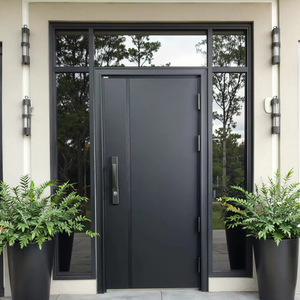
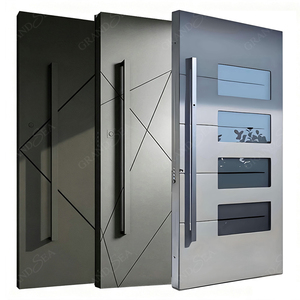
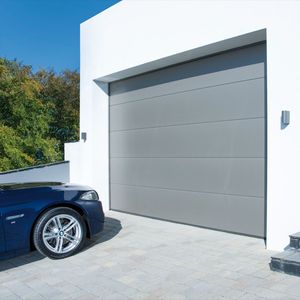
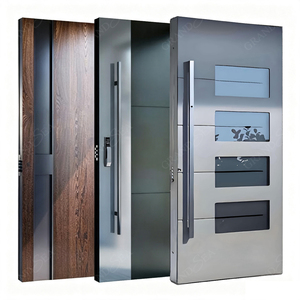
Architectural Physics & Thermal Dynamics of Modern Insulated Entrance Systems
An technical evaluation of thermal break design, polyisocyanurate core density, acoustic attenuation mechanisms, and climate-specific envelope engineering for global architectural projects.
1. Thermal Transmittance Optimization ($U$-Value Reduction)
In modern building envelope engineering, entry door assemblies represent a significant thermal bridge if not structurally broken. Standard uninsulated aluminum or hollow-core steel entry doors exhibit high thermal transmittance values ($U$-values exceeding 3.5 W/m²K), resulting in convective heat loss, surface condensation, and accelerated interior HVAC energy consumption.
Our export-grade insulated entrance systems utilize a multi-chambered polyamide thermal break structure (PA66 GF25—25% fiberglass-reinforced nylon). By mechanically crimping precision-engineered polyamide struts between exterior and interior aluminum skins, conductive heat transfer paths are effectively interrupted. Paired with high-pressure injected polyurethane (PUR) or polyisocyanurate (PIR) cores featuring a uniform cell density of 48–52 kg/m³, our entry door assemblies achieve overall system $U$-factors as low as 0.85 W/m²K (0.15 BTU/h·ft²·°F), exceeding stringent ENERGY STAR®, NFRC, and European Passivhaus component certification criteria.
2. Acoustic Insulation & Perimeter Weather Sealing Mechanics
Occupant comfort in urban multi-family developments and luxury villas requires high Sound Transmission Class (STC) and Outdoor-Indoor Transmission Class (OITC) acoustic ratings. Uncontrolled sound leakage occurs predominantly through perimeter threshold gaps and uninsulated panel cavities.
We integrate triple-pass EPDM (Ethylene Propylene Diene Monomer) continuous weatherstripping gaskets combined with automatic drop-down bottom door seals. Internal acoustic baffling is accomplished by combining high-density closed-cell core foam with viscoelastic damping layers inside armored steel and cast aluminum panels. This composite construction impedes airborne acoustic transmission across 125 Hz–4000 Hz frequency bands, delivering an independently verified STC noise reduction rating of 38 dB to 45 dB.
| Door System Category | Core Insulation Material | Thermal Transmittance (U-Value) | Structural Wind-Load Resistance | Acoustic Rating (STC) | Target Export Market Compliance |
|---|---|---|---|---|---|
| Cast Aluminum Villa Doors | High-Density PUR Foam (50 kg/m³) | 0.95 - 1.10 W/m²K | ASTM E330 Class DP65 | 40 dB | Middle East SASO / US Florida Hurricane Code |
| Armored Steel Security Doors | Rockwool / Expanded PIR Matrix | 1.10 - 1.30 W/m²K | EN 12210 Class C5 | 42 dB | EU CE / UKCA / UL 10C Fire Rated |
| Thermal Break Smart Pivot Doors | Polyamide Cavity + Aerogel Blanket | 0.85 - 0.98 W/m²K | AS 2047 4500Pa Ultimate | 38 dB | North America NFRC / Australia AS2047 |
| Insulated Sectional Garage Doors | Continuous HCFC-Free Polyurethane | 0.54 W/m²K (Panel Value) | ANSI/DASMA 108 Compliant | 32 dB | US Title 24 / EU EN 13241-1 |
Information Gain: Mitigating Thermal Bridging in Oversized Pivot and Double Entry Systems
Large architectural pivot doors frequently suffer from perimeter thermal warping due to thermal differential stress ("Schilder-effekt") between severe winter exteriors and air-conditioned interiors. Our factory addresses this via anti-bi-metal polyamide strips with integrated sliding tracks that absorb longitudinal thermal expansion, ensuring zero frame binding or latch displacement under extreme temperature differentials (-30°C to +60°C).
Future Sourcing Trends & Innovation Vectors in Entrance Systems
Key technological, regulatory, and supply chain shifts reshaping global B2B procurement for commercial developers, general contractors, and door importers over the next decade.
1. Passivhaus & Net-Zero Carbon Standards
Global building codes are rapidly transitioning toward zero-carbon emissions. Regulatory frameworks like California’s Title 24, Germany’s GEG (Gebäudeenergiegesetz), and Australia’s NCC 2022 mandate ultra-low operational energy consumption.
Sourcing Impact: Procurement teams must prioritize manufacturers offering fully documented Environmental Product Declarations (EPDs), low-carbon recycled aluminum profiles (made using renewable hydro-power), and verified low U-factor test reports from accredited labs such as Intertek, TÜV, and NFRC.
2. Smart Mechatronic Integration
Traditional mechanical mortise locks are giving way to integrated motor-driven multi-point lock systems (such as KFV, Siegenia, or custom proprietary mechatronic latching).
Sourcing Impact: Modern insulated entry doors must be pre-wired at the factory level with internal conduit pathways, concealed door contacts, biometric 3D facial recognition modules, and universal IoT protocol compatibility (Matter, Zigbee, RS485 for KNX building automation systems).
3. Material Hybridization & Surface Longevity
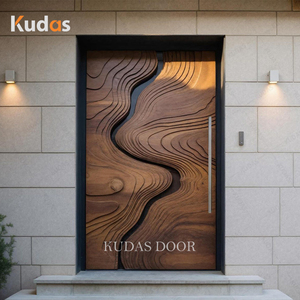
Architectural aesthetic demands are driving the hybrid integration of natural solid wood veneers (such as Burmese Teak or Black Walnut) with heavy-duty structural cast aluminum plates and anti-corrosion fluorocarbon (PVDF) outdoor coatings.
Sourcing Impact: Buyers require advanced surface protection capable of enduring 2,000+ hours of ASTM B117 salt spray testing for coastal marine environments (C5-M corrosion rating) without chalking, blistering, or delamination.
Why Partner with Novor Front Door Technology
A specialized multi-plant industrial operational footprint designed to supply Tier-1 construction firms, regional door distributors, and commercial project developers worldwide.
Tri-Plant Specialized Manufacturing Cluster
Unlike generalist trading firms, Novor operates dedicated manufacturing facilities across key Chinese industrial hubs to maximize production efficiency and engineering expertise:
- Yongkang, Zhejiang: Specialized in heavy cast aluminum villa entry doors and luxury armored doors.
- Foshan, Guangdong: Dedicated line for precision thermal-break aluminum windows, sliding profiles, and architectural hardware.
- Haikou, Hainan: Corporate HQ, international trade logistics, and steel security fire door assembly plant.
International Testing & Certification Compliance
Our complete production line complies with ISO 9001 quality management procedures. Every door series undergoes rigorous third-party inspection and certification to ensure frictionless entry into destination markets:
End-to-End B2B Project Engineering Support
We act as an extended engineering arm for architects and general contractors, delivering comprehensive OEM/ODM customization services:
- Automated CAD shop drawings & 3D BIM object modeling for seamless architectural integration.
- 15-to-30 day rapid manufacturing lead times with batched container scheduling.
- Export-grade reinforced wooden crate packaging with corner protective film for zero-damage sea transport.
Frequently Asked Questions for B2B Importers & Contractors
Detailed answers regarding engineering standards, thermal calculations, factory testing, minimum order quantities, and custom OEM manufacturing.
How do Chinese wholesale insulated entry doors achieve compliance with North American NFRC and European CE energy codes?
Compliance is achieved through precise material engineering. We incorporate multi-chambered polyamide thermal breaks (PA66 GF25) that physically isolate the exterior aluminum or steel frame from the interior profile. Combined with high-density polyurethane (PUR) injection foam cores (48-52 kg/m³) and double/triple-glazed Low-E argon gas-filled glass units, our door systems obtain certified U-factors down to 0.85 W/m²K (0.15 BTU/h·ft²·°F). We provide full laboratory test documentation matching your project's opening schedules for presentation to local building inspectors.
What is the difference between solid cast aluminum entry doors and steel armored insulated doors?
Cast aluminum doors are constructed using 100% solid cast aluminum panels (typically 8mm to 12mm plate thickness), providing absolute immunity to rust, corrosion, and severe coastal weather (salt air). They are ideal for high-end residential villas. Armored steel doors utilize cold-rolled galvanized steel leaves reinforced with internal manganese steel anti-drill plates and structural vertical ribs, offering maximum forced-entry resistance and high fire ratings at a competitive price point for commercial and apartment projects.
How do you prevent thermal expansion warping in large architectural pivot doors?
Large pivot doors exposed to high temperature gradients (e.g., direct sun outdoors, cold AC indoors) experience differential thermal movement. We solve this by engineering internal longitudinal sliding thermal break channels and anti-bi-metal polyamide struts. This allows the exterior skin to expand independently of the structural door core without inducing frame bowing, binding, or air-seal failure.
What is your typical production lead time and minimum order quantity (MOQ) for custom OEM projects?
Standard manufacturing lead time is 15 to 30 days following shop drawing approval and sample sign-off. For standard architectural models, our MOQ starts at 5 to 10 units for sample evaluation or small projects. For full custom OEM/ODM profiles, private-label branding, and multi-family commercial projects, we optimize pricing around full 20ft/40ft container loads (approx. 60–140 door sets depending on dimensions and assembly state).
How are door products packaged to prevent damage during ocean transit?
Every door leaves our factory wrapped in anti-scratch protective film, fitted with heavy-duty EPE foam corner guards, and enclosed in fully sealed export-grade plywood crates (fumigation-free). Glass units are cushioned with rubber shock-absorbing gaskets, and hardware components are packed in separate reinforced sub-boxes inside the crate to guarantee 100% damage-free delivery at destination ports.
Can fire-rated entry doors maintain both certified thermal insulation and acoustic ratings?
Yes. Our commercial fire doors utilize a specialized mineral core matrix (perlite and rockwool combination) that provides 45, 60, 90, or 120-minute UL 10C / EN 1634-1 fire endurance while simultaneously delivering excellent thermal resistance and STC acoustic insulation (up to 42 dB). Intumescent fire seals around the frame expand during high heat exposure to block toxic smoke and thermal flame spread.
Are smart access control systems pre-installed at the factory?
We offer factory integration of smart hardware, including motorized multi-point lock bodies, biometric fingerprint sensors, keypad entry, card readers, and video intercom cameras. Wiring conduits are integrated inside the insulated door leaf, with concealed power transfer hinges (spring pins or flexible armored cable loops) pre-installed for plug-and-play connection on site.
What warranty coverage and technical support do you provide overseas buyers?
Novor Front Door provides a comprehensive 5-year structural warranty on all door frames, aluminum panels, and thermal core assemblies, along with a 2-to-3 year warranty on electronic smart locking components and hardware surface coatings. We provide 24/7 remote engineering support, installation manuals, CAD anchor positioning diagrams, and spare hardware parts with every container shipment.
Ready to Source High-Performance Insulated Doors for Your Next Project?
Partner directly with a certified Chinese wholesale manufacturer. Submit your project door schedule, CAD drawings, or procurement specifications today for a detailed engineering consultation and competitive FOB/CIF quotation within 24 hours.