Featured OEM Weather-Resistant Entry Doors & Security Hardware
Precision-engineered exterior doors built to withstand severe wind loads, salt-spray corrosion, and thermal expansion while delivering exceptional architectural aesthetics.
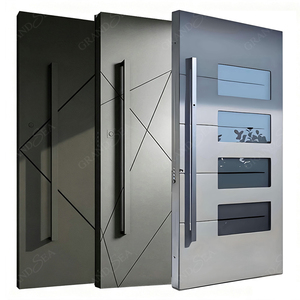
Luxury Modern American Cast Aluminum Smart Armored Entry Door High-end Security Main Entrance Door Solid Wood Pivot Front Door
Heavy-duty cast aluminum structure with embedded solid wood backing, biometric integration, and heavy thermal insulation core.
Get Catalog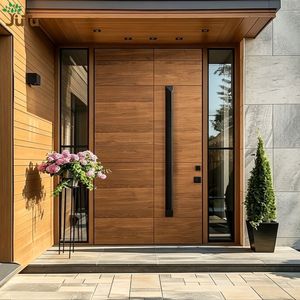
Mid Century Solid Mahogany Wood Matte Finish Sustainable Eco Friendly Luxury Estate Main Exterior Front Pivot Door
Sustainable mahogany wood slab with anti-warping aluminum spine reinforcement, marine matte sealing, and pivot hinge mechanisms.
Get Catalog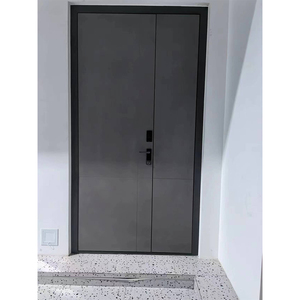
CHANGYI American House Modern Entry Door Front Entrance Door for House and Villa
Contemporary residential entrance door featuring multi-point latching, double EPDM perimeter gaskets, and customized powder coatings.
Get Catalog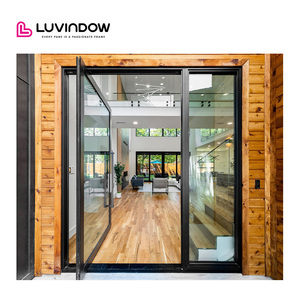
Modern Pivot Aluminum Door Glass Front Villa Entry US Made Thermal Break Energy Efficient
High energy-efficiency aluminum pivot assembly with thermal break profile, low-E tempered insulated glazing, and zero-threshold sill.
Get Catalog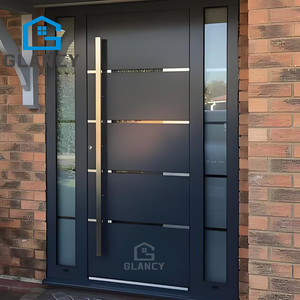
Exterior American Door House Other Front Stainless Pivot Main Entrance Front Entry Pivot Steel Security Doors
Grade 304/316 stainless steel armored entry system built with concealed anti-pry hinges and weather-sealed frame extrusions.
Get Catalog
Customized Luxury Aluminum Solid Wood Exterior Front Entry Single Pivot Door for Home Villa Residential
Architectural hybrid entrance combining exterior weather-resistant T6 aluminum structural casing with interior solid wood paneling.
Get Catalog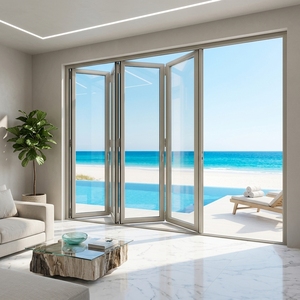
Factory Customized Modern Interior Bi-fold Outdoor Balcony Frameless Glass Doors for Hotels Panoramic Indoor Sliding Accordion
Commercial bi-folding accordion glass door system engineered for panoramic balcony access, storm resistance, and acoustic dampening.
Get Catalog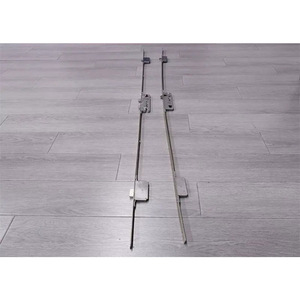
Iron Multi Point Linkage Long Lock Body Vertical Extension Security 3 Point Mortise Lock For Household Entry Anti Theft Door
High-security multi-point locking mechanism with vertical extension rods, hardened steel deadbolts, and anti-drill mortise construction.
Get CatalogEngineering Architecture for Weather-Resistant Entry Doors
A comprehensive analysis of structural wind performance, thermal barrier integration, and moisture control systems for high-end residential and B2B commercial building envelopes.
Modern building envelopes require exterior entrance doors to serve not only as architectural focal points, but also as high-performance barrier systems capable of resisting environmental pressures. When sourcing custom OEM entry doors for commercial developments, residential estates, or multi-family project packages, procurement specialists must evaluate critical performance metrics including Thermal Transmittance (U-Factor), Air Infiltration (ASTM E283), Water Penetration Resistance (ASTM E331), and Design Pressure (DP) Ratings.
Weather resistance in custom OEM entry door manufacturing relies on advanced material science and structural engineering. Standard uninsulated metal doors or solid timber slabs suffer from thermal warping, surface oxidation, or seal degradation over time when exposed to UV radiation, heavy rainfall, and severe ambient temperature fluctuations. Next-generation entry systems integrate multi-layer composite structures, polyamide thermal breaks (PA66-GF25), non-degrading EPDM gaskets, and specialized fluorocarbon (PVDF) surface treatments.
Polyamide Thermal Barriers
Utilizing glass-fiber reinforced PA66 polyamide strips to separate exterior and interior aluminum extrusions, reducing thermal conductivity to achieve U-factors below 0.19 BTU/h·ft²·°F.
Hydrostatic Water Sealing
Multi-stage weather-stripping utilizing continuous EPDM gaskets with internal drainage channels to prevent water penetration at test pressures exceeding 720 Pa (DP-100 standards).
Structural Armor & Anti-Pry
High-tensile 6063-T6 aluminum alloy framework coupled with 304/316 stainless steel reinforcement cores and multi-point mortise linkage for ultimate forced-entry protection.
| Engineering Specification | Standard Residential Entry | High-Performance OEM Custom Door | Compliance Standard |
|---|---|---|---|
| Thermal Transmittance (U-Factor) | 0.45 – 0.60 W/m²K | 0.15 – 0.22 W/m²K (Thermal Break) | NFRC 100 / Energy Star 7.0 |
| Air Infiltration Rate | 0.30 cfm/sq ft | < 0.05 cfm/sq ft (Air-tight) | ASTM E283 / EN 12207 Class 4 |
| Water Resistance Test | 150 Pa – 300 Pa | 720 Pa (Extreme Storm Rated) | ASTM E331 / EN 12208 Class 9A |
| Structural Wind Load (DP) | DP 30 – DP 45 | DP 70 – DP 100 (Hurricane Impact) | ASTM E330 / TAS 201/202/203 |
| Acoustic Isolation (STC) | STC 25 – STC 28 | STC 38 – STC 45 (Soundproof Core) | ASTM E90 / ISO 140-3 |
Future Procurement Trends in Architectural Door Sourcing
Key industry shifts reshaping how real estate developers, contractors, and building material importers specify custom exterior doors.
The global architectural door market is undergoing a rapid transition driven by stringent regional energy codes (such as California Title 24, European EPBD directive, and US Energy Star 7.0 requirements) alongside rising demand for resilient building envelope components. Procurement teams are moving away from off-the-shelf catalog buying toward custom OEM/ODM partnerships capable of supplying fully engineered opening systems tailored to specific microclimates and structural code demands.
Major strategic trends impacting international entry door procurement include:
1. Single-Source Envelope Consolidation
Developers increasingly prefer manufacturers that supply matched exterior entrance doors, thermal break windows, garage doors, and curtain walls under one consolidated engineering process to eliminate dimensional discrepancies and finish mismatches on site.
2. Prefabricated Off-Site Modular Assembly
To combat rising job-site labor costs, general contractors demand pre-hung entrance units pre-fitted with multi-point hardware, sub-frame anchoring systems, and factory-calibrated pivot hinges ready for immediate wall integration.
3. Smart Access & Motorized Security
Modern entry doors are expected to integrate concealed electric strikes, motorized 3-point latching systems, facial recognition biometrics, and home automation connectivity without sacrificing weather-sealing performance.
Product Development & Material Trends in Weather-Resistant Doors
Innovations in metal casting, composite wood stabilization, and coating technologies have resolved historic trade-offs between architectural luxury and outdoor durability. Key material evolutions implemented in modern OEM door production include:
A. Heavy-Gauge Cast Aluminum Armored Panels: Cast aluminum offers superior structural density and corrosion resistance compared to thin stamped steel or hollow extruded profiles. By gravity-casting high-purity aluminum alloys into solid 8mm–15mm decorative or geometric panels, doors achieve bullet-resistant structural integrity while remaining completely rust-free even in coastal marine environments.
B. Hybrid Wood-Aluminum Composites: Traditional timber doors exposed to direct sun and humidity inevitably warp, twist, or split at the joinery. Modern OEM engineering solves this by constructing exterior-facing armor in anodized or PVDF-coated aluminum, separated from an interior genuine solid wood panel (mahogany, oak, or teak) via a thermal break cavity. This provides natural luxury inside while guaranteeing absolute outdoor weather resistance.
C. Advanced Fluorocarbon (PVDF) Surface Finishes: Standard powder coatings degrade under high UV exposure within 3–5 years. OEM export-grade doors now specify 3-coat or 4-coat Kynar 500® PVDF fluorocarbon coatings, tested to withstand 3,000+ hours of salt spray exposure (ASTM B117) and 20+ years of chalk resistance in tropical regions.
Novor Front Door: Your Trusted OEM Manufacturing & Export Partner
Integrating 20+ years of specialized fabrication experience, advanced R&D, and certified export management across three dedicated production plants.
Specialized Production Clusters
Operations span three focused facilities: Yongkang (Cast Aluminum & Luxury Armored Doors), Foshan (Thermal Break Aluminum & Window Systems), and Haikou Headquarters (Steel Security & Fire Rated Assemblies).
Global Code Compliance
Products hold official CE marking, UL 10C fire ratings (45–90 min), NFRC energy certifications, AS 2047 Australian window standards, and CSA certification backed by ISO 9001 quality management.
Full OEM/ODM Engineering
Complete support from CAD shop drawing creation, 3D modeling, custom extrusion dies, hardware custom matching, sample sign-off, to export wooden crate packaging for zero transit damage.
Frequently Asked Questions (FAQ) for B2B Buyers
Clear, definitive answers regarding technical certifications, OEM production timelines, shipping protection, and code compliance for commercial importers.
Which international certifications do your weather-resistant entry doors hold?
What is your standard factory production lead time for custom OEM orders?
Can you manufacture entry doors engineered specifically for Florida Hurricane Codes or US cold climate energy standards?
What OEM / ODM customization options are supported for door importers and developers?
How are large pivot and cast aluminum doors packaged to guarantee zero damage during sea freight?
What warranty policy is provided for commercial export orders?
Ready to Engineer Your Custom OEM Entry Door Package?
Submit your project opening schedule, architectural drawings, or technical specifications. Our engineering team will review your code requirements and deliver a comprehensive factory-direct quote within 24 hours.