In modern commercial and high-end residential architecture, the structural integrity of fenestration systems depends primarily on the quality and mechanical configuration of the door frame. As building codes across North America, Europe, Australia, and the Middle East enforce stringent requirements regarding structural wind loading, thermal transmittances (U-factors), and forced-entry deterrence, specifying the correct OEM/ODM reinforced aluminum door frame has become a critical procurement decision for developers, general contractors, and door brand distributors.
This industry specification report examines the metallurgical compositions, thermal break technologies, surface protection treatments, and extrusion parameters necessary for industrial-grade aluminum door frames. Manufactured predominantly from high-tensile 6063-T6 or 6061-T6 aluminum alloys, reinforced frames provide unmatched structural strength while remaining corrosion-free in marine (C5-M atmospheric rating) and extreme temperature environments.
Featured OEM/ODM Reinforced Aluminum Door Systems
High-performance structural frame configurations pre-engineered for global commercial, hospitality, and luxury residential projects.
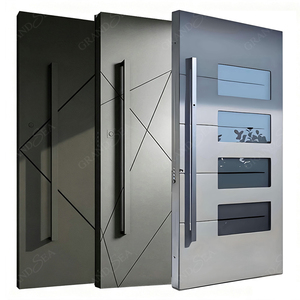
Luxury Modern American Cast Aluminum Smart Armored Entry Door
Heavy-duty cast aluminum entry leaf paired with reinforced 3.0mm structural jambs. Integrated motorized smart lock pathways and solid wood interior pivot cladding.
Get a Quote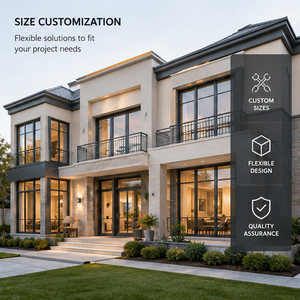
Bespoke Aluminum Entrance Doors & Window Systems
Commercial storefront and hotel main entrance systems. Polyamide PA66-GF25 thermal barrier frames engineered for extreme high-traffic durability.
Get a Quote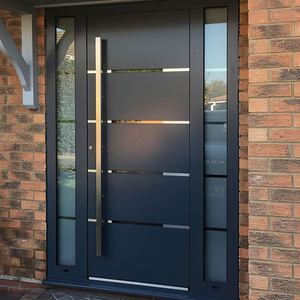
Modern Luxury Aluminum Pivot Front Entrance Door
Oversized architectural pivot system featuring concealed German hydraulic floor pivots, high security locking bolts, and weather-sealed aluminum framing.
Get a Quote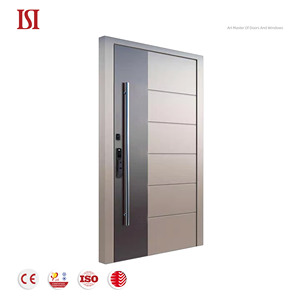
Contemporary Aluminum Alloy Double Security Entry Door
Dual-leaf grand villa doors with soundproof EPDM multi-chamber gaskets and anti-pry reinforced frame profile sections for maximum forced-entry security.
Get a Quote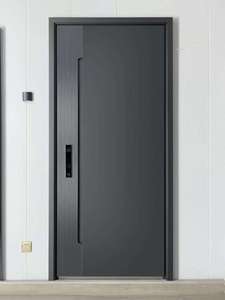
Custom Soundproof & Fireproof Aluminum Entrance Door
Multi-layer insulated steel core surrounded by precision extrusions. Acoustic rating up to STC 42dB with certified fire-retardant structural frame cores.
Get a Quote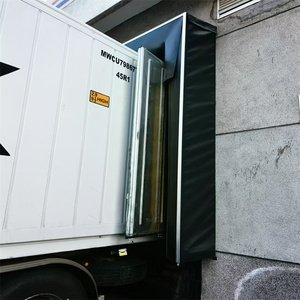
Industrial Thermal Insulated Aluminum Alloy Door
Designed for heavy industrial and commercial utility applications featuring dust-proof sealing, wind load resistance up to Class 4, and durable anodized finish.
Get a Quote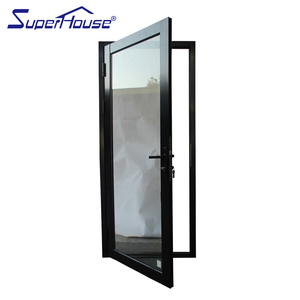
Miami NOA Approved Hurricane Impact Aluminum Hinged Door
Florida HVHZ code compliant. Features heavy gauge 6063-T6 reinforced jambs, triple-glazed laminated impact glass, and DP70 design pressure certification.
Get a Quote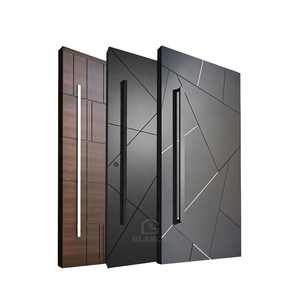
Modern Exterior Double Pivot Aluminum-Clad Entry System
Combines weather-resistant exterior aluminum framing with internal wood aesthetic trim. Includes stainless steel heavy hardware and drainage sub-sills.
Get a QuoteEngineering Specs of Reinforced Aluminum Door Frames
An extruded aluminum door frame cannot rely solely on standard window profile dimensions. For heavy entrance leaves (often exceeding 150 kg to 350 kg in luxury pivot and cast aluminum configurations), the frame profile must feature internal structural ribs and web reinforcement to prevent racking, torsional twisting, and deflection under high wind loads.
1. Alloy Selection & Artificial Heat Treatment
High-grade OEM factories utilize primary aluminum billets in 6063-T6 or 6061-T6 temper. The T6 treatment involves solution heat treatment followed by artificial aging, driving yield strength above 170 MPa (for 6063-T6) and 240 MPa (for 6061-T6). This ensures that screw retention torque at hinge locations remains secure over decades of constant dynamic cycling.
2. Wall Thickness Standards for B2B Structural Profiles
Standard architectural residential profiles utilize wall thicknesses between 1.4mm and 1.6mm. However, industrial-grade reinforced aluminum door jambs engineered by tier-1 OEM factories feature critical structural web thicknesses from 2.0mm to 3.5mm. This extra wall thickness supports heavy multi-point locks, concealed door closers, and heavy-duty 3D adjustable hinges without deformation.
3. Polyamide PA66-GF25 Thermal Break Technology
To combat thermal bridging in cold climates (such as Canada and Northern Europe) or heat gain in desert regions (Middle East), reinforced profiles incorporate structural thermal breaks. The industry gold standard utilizes Polyamide PA66 reinforced with 25% short glass fibers (PA66-GF25). Unlike cheap PVC substitutes, PA66-GF25 matches the coefficient of thermal expansion of aluminum, ensuring that composite frames do not delaminate under thermal stress cycles ranging from -40°C to +80°C.
Comparative Engineering Specs Matrix
Technical performance evaluation across different aluminum door frame classes.
| Specification Metric | Standard Residential Frame | OEM Commercial Reinforced Frame | Hurricane Impact (Miami NOA) Frame | Thermal Break Security Frame |
|---|---|---|---|---|
| Alloy & Temper | 6063-T5 | 6063-T6 / 6061-T6 | 6061-T6 Heavy Alloy | 6063-T6 Structural |
| Profile Web Thickness | 1.4mm – 1.6mm | 2.0mm – 2.5mm | 2.8mm – 3.5mm Reinforced | 2.2mm – 3.0mm Multi-chamber |
| Tensile Strength (Ultimate) | ≥ 150 MPa | ≥ 205 MPa | ≥ 290 MPa | ≥ 215 MPa |
| Thermal Insulation (U-Factor) | 0.80 – 1.20 BTU/h·ft²·°F | 0.45 – 0.65 BTU/h·ft²·°F | 0.50 – 0.70 BTU/h·ft²·°F | 0.15 – 0.28 BTU/h·ft²·°F |
| Air Infiltration Rating | Class 2 (ASTM E283) | Class 4 (ASTM E283) | High Velocity HVHZ Compliant | Airtight / Pressure Sealed |
| Max Door Leaf Capacity | Up to 100 kg | Up to 250 kg | Up to 450 kg | Up to 300 kg |
| Surface Finish Standard | Standard Powder Coat | Qualicoat Class 2 / PVDF | AAMA 2605 Marine Coating | PVDF / Anodized 25µm |
Global Procurement Trends & Future Outlook (2025–2030)
The global market for architectural entrance systems is undergoing structural transformations driven by environmental mandates, extreme weather phenomena, and smart building automation. B2B buyers and importers must align their supplier selection with these four macro purchasing trends:
1. Decarbonization & Low-Carbon Billets
Major European and North American projects now request Environmental Product Declarations (EPDs). OEM factories are integrating recycled scrap (hydro-electric powered smelting) to reduce embodied carbon below 4.0 kg CO2e/kg Al.
2. Hurricane Impact & Forced-Entry Certification
Coastal developments require compliance with Miami-Dade NOA and Florida Product Approvals. Frame designs feature heavy structural steel sub-reinforcements and heavy-duty anchor brackets capable of resisting DP70 to DP100 pressures.
3. Smart Lock & Access Control Integration
Modern frames require pre-milled CNC wiring channels, magnetic sensor pockets, and electric strike pre-cuts. Factory-level pre-drilling guarantees seamless field integration with biometrics and commercial access hubs.
Factory Engineering Infrastructure & Quality Control Protocols
Sourcing directly from an integrated OEM/ODM door frame manufacturer like Novor Front Door Technology Co., Ltd. eliminates supply chain fragmentation. Rather than managing separate suppliers for extrusions, thermal break insertion, surface finishing, and steel security door cores, B2B buyers benefit from a unified production model backed by dedicated regional manufacturing facilities:
- Foshan Plant (Guangdong): Specializes in precision aluminum extrusion, thermal break assembly, CNC 5-axis profile machining, and sliding/casement window framing systems.
- Yongkang Plant (Zhejiang): Located in China's "Door Capital" industrial center, dedicated to luxury cast aluminum entrance doors, armored villa entries, and custom architectural pivot framing.
- Haikou Plant (Hainan HQ & Export Center): Handles international logistics, engineering drafting approvals, steel security doors, and UL-certified fire-rated door assemblies.
Every production batch undergoes strict quality control tests certified under ISO 9001 quality systems. Mechanical testing includes tensile yield analysis, corner key crimping shear tests, surface coating thickness verification (measuring dry film thickness to ensure ≥ 60 to 80 microns for powder coat or AAMA 2605 PVDF specs), and air/water infiltration chamber testing compliant with CE (EN 14351-1), NFRC, CSA, and Australian AS 2047 benchmarks.
B2B Technical Procurement FAQ
Detailed technical answers for architectural specifiers, door fabricators, and commercial importers.
1. What aluminum alloy temper is recommended for heavy-duty entry door jambs?
2. How do polyamide PA66-GF25 thermal breaks prevent frame condensation?
3. Can your factory manufacture custom extrusion dies for proprietary OEM profile designs?
4. What surface finishes are recommended for coastal marine environments (C5-M)?
5. What compliance certifications do your door and frame assemblies carry for US and EU markets?
6. How are oversized knock-down (KD) aluminum door frames packaged to prevent ocean freight transit damage?
7. What standard manufacturing lead time is expected for custom project orders?
8. How do you guarantee corner joint alignment and seal tightness on double entrance frames?
Accelerate Your Engineering Procurement Today
Connect directly with our senior fenestration engineers to receive shop drawings, thermal calculation reports, and factory-direct pricing for your project schedule.