High-Security Aluminum Entrance Doors Catalog
Engineered for architectural projects, residential estates, and commercial complexes requiring certified forced-entry resistance, thermal break insulation, and hurricane-impact capabilities.
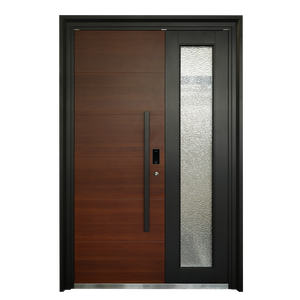
Aluminum Security French Door - Waterproof Exterior Entry Door
Heavy-duty dual leaf thermal break system for luxury hotels, apartments, and modern coastal villas.
Contact Us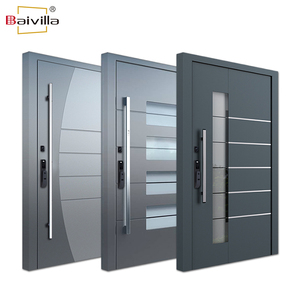
Luxury Modern Metal Main Entrance Pivot Door with Smart Lock
Oversized single leaf entrance with heavy-duty offset pivot axis, integrated biometric access, and multi-point lock.
Contact Us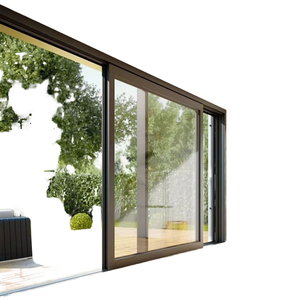
Architectural Aluminum Outdoor Door for Designers & Renovation
Customizable profile finish system tailored for commercial renovation contractors and high-end architects.
Contact Us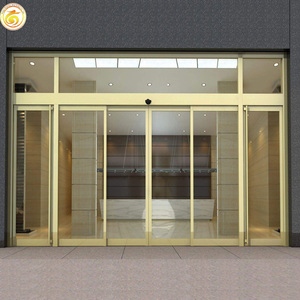
Innovative Frameless Glass Storefront Doors for Boutique Entrances
High-clarity double-glazed storefront entries engineered for commercial hospitality and boutique entrances.
Contact Us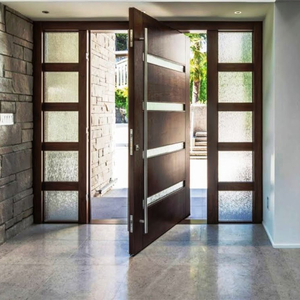
Top Quality High Glossy Exterior Wood Grain Pivot Entry Door
Weatherproof aluminum core with luxury high-gloss fluorocarbon wood-grain finish and insulated sidelites.
Contact Us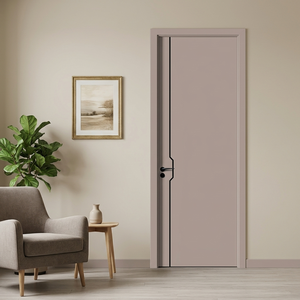
Premium Rust-Proof Lightweight Aluminum Alloy Utility Door
Corrosion-resistant aluminum alloy construction ideal for educational dormitories, laboratories, and commercial kitchens.
Contact Us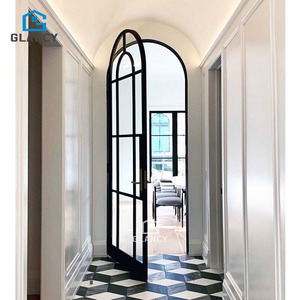
CE Certified Modern Glass Arch Exterior Insulated Aluminum Door
Black powder-coated thermal break arch doorway featuring high acoustic damping and thermal barrier technology.
Contact Us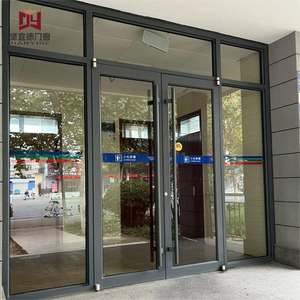
Heavy Duty Commercial KFC-Style Windproof Storefront Door
Reinforced double-glazed entrance engineered for extreme wind load pressures and continuous high-traffic commercial use.
Contact Us1. Executive Summary: The Evolution of Secure Aluminum Front Doors in Global Architectural Procurement
In contemporary architectural engineering and commercial real estate development, front entrance door systems have transitioned from passive access barriers into multi-functional structural envelopes. The modern secure aluminum front door must concurrently satisfy stringent physical security standards (such as European EN 1627 RC2–RC4 or North American ASTM F476), strict thermal performance mandates (NFRC thermal transmission ratings), and structural resistance to severe weather events (including ASTM E1300 wind load and TAS 201/203 hurricane impact protocols).
Aluminum alloys—specifically extruded 6063-T6 marine-grade aluminum and precision-cast A356 structural alloys—have emerged as the premier material class for exterior entryways. Unlike solid timber, which suffers from hygroscopic expansion and warping, or steel, which exhibits susceptibility to atmospheric oxidation in coastal marine environments (C4/C5 corrosion zones), modern aluminum door systems deliver unparalleled dimensional stability, strength-to-weight ratio, and structural longevity. This whitepaper analyzes the global manufacturing landscape, evaluates the top 10 suppliers and exporters, explores critical engineering trends for 2026–2030, and provides B2B buyers with actionable procurement guidelines.
2. Structural Security & Thermal Insulation Benchmark Matrix
To accurately evaluate security aluminum door manufacturers, international procurement officers, facade consultants, and general contractors must benchmark structural profiles against standardized international criteria. The table below details key performance metrics across major global security door classifications:
| Security Rating Class | Resistance Standard | Locking Mechanism Specs | Thermal Break Rating ($U_f$) | Target Project Category |
|---|---|---|---|---|
| EN 1627 RC2 / PAS 24 | Base Forced-Entry Resistance (3 min tool attack) | 3-Point Hook Lock + Anti-Drill Cylinder | 1.2 - 1.6 W/m²K | Multi-Family Residential & Light Commercial |
| EN 1627 RC3 / ASTM F476 | Medium Physical Attack (5 min heavy crowbar) | 5-Point Automatic Deadbolt + Smart Biometrics | 0.9 - 1.2 W/m²K | Luxury Villas, Executive Suites & Retail Outlets |
| EN 1627 RC4 / UL 10C | High Security (10 min heavy impact & power tools) | 7-Point Motorized Locking + Steel Armor Core | 0.75 - 0.95 W/m²K | High-Net-Worth Estates, Banks & Fire-Rated Openings |
| Hurricane Impact (TAS 201) | Large Missile Impact (9 lb 2x4 at 50 fps) | Concealed Continuous Hinge + Reinforced Frame | 1.0 - 1.4 W/m²K | Coastal Zone Developments (Florida, Gulf, Caribbean) |
3. Comprehensive Evaluation of the Top 10 Secure Aluminum Front Door Suppliers & Exporters
The global door and window supply chain comprises specialized manufacturers spread across Europe, North America, and Asia. Below is an authoritative technical benchmark of the leading 10 suppliers, assessed on manufacturing capacity, product compliance, customized OEM capabilities, and international export track record:
1. Novor Front Door Technology Co., Ltd. (China)
Overview & Manufacturing Edge: Headquartered in Haikou with specialized manufacturing facilities in Yongkang (Cast Aluminum Plant) and Foshan (Thermal Break Aluminum & Hardware Cluster), Novor Front Door operates a vertically integrated export enterprise. Built over 20+ years of industrial operation, Novor specializes in custom-engineered cast aluminum villa doors, heavy-duty modern pivot entrances, and fire-rated steel-aluminum hybrid assemblies. Their facilities utilize multi-axis CNC machining, automated polyamide thermal strip insertion, and electro-static fluorocarbon powder coating.
Technical Compliance: Fully certified under CE, UL 10C (45/60/90-minute fire ratings), NFRC, AS 2047, and ISO 9001. Products undergo third-party auditing by TÜV AUSTRIA and Bureau Veritas. Exporting to over 30 countries across North America, Europe, Australia, and the Middle East, Novor provides 15–30 day lead times and consolidated multi-product project shipping.
2. Hörmann Group (Germany)
Overview: A premier European manufacturer known for industrial and residential entrance systems. Hörmann’s ThermoCarbon and ThermoSafe aluminum entrance door lines feature high acoustic insulation ratings and aluminum leaf thicknesses up to 100mm.
Strengths: Outstanding thermal insulation ($U_d$ values down to 0.47 W/m²K) and robust RC4 security engineering. Primarily optimized for European architectural standards.
3. Schüco International (Germany)
Overview: A global leader in aluminum facade systems, window profiles, and door frameworks. Schüco’s ADS (Aluminum Door System) platforms are widely utilized in modern high-rise commercial developments.
Strengths: Extensive global network of licensed fabricators, seamless integration with building management systems (BMS), and advanced thermal break profiles.
4. Reynaers Aluminium (Belgium)
Overview: Reynaers produces high-performance architectural aluminum solutions, including the MasterLine 8 and CS 86-HV entrance systems. Known for minimalist frame sightlines and high structural stability.
Strengths: Superior wind and water tightness, Cradle to Cradle certified sustainable profiles, and exceptional contemporary aesthetic options.
5. Origin Doors and Windows (United Kingdom)
Overview: A UK-based manufacturer specializing in residential aluminum front doors, bi-fold doors, and ultra-slim sliding systems crafted from premium grade aluminum alloys.
Strengths: High degree of color customization (RAL finish options), rapid lead times within regional markets, and multi-point 8-star security locking systems.
6. Kawneer / Arconic Building Structures (USA)
Overview: A major commercial building systems manufacturer supplying architectural aluminum storeys, curtain walls, and heavy-duty entrance doors across the Americas.
Strengths: High hurricane impact resistance, compliance with US building codes (ASTM/AA standards), and durable anodized finishes for commercial retail.
7. YKK AP Inc. (Japan / USA)
Overview: The architectural products division of YKK Group, producing commercial storeys, residential fenestration, and heavy-traffic entrance doors.
Strengths: Precision Japanese engineering, highly standardized manufacturing processes, and robust hurricane-resistant aluminum entrance systems for coastal zones.
8. Alumil Aluminium Industry (Greece)
Overview: One of Southern Europe’s largest aluminum extrusion manufacturers. Alumil’s Supreme SD95 and SD115 entrance series cater to large-span luxury architectural openings.
Strengths: Exceptional pivot door load capacity (supporting leaf weights up to 1000 kg) and comprehensive thermal break insulation profiles.
9. Andersen Windows & Doors / StormWatch Series (USA)
Overview: A dominant North American fenestration manufacturer offering residential aluminum-clad and aluminum entrance door systems engineered for extreme weather conditions.
Strengths: Broad domestic dealer network, extensive hurricane impact testing (Miami-Dade approval), and traditional-to-modern design versatility.
10. MasterLine / AluK Group (Luxembourg / Global)
Overview: A global designer and fabricator of aluminum fenestration and door systems with manufacturing hubs across Europe, Asia, and the Middle East.
Strengths: Flexible architectural hardware integration, cost-competitive mid-to-high end commercial profiles, and strong thermal performance metrics.
4. Future Technology & Procurement Trends in Aluminum Front Doors (2026–2030)
The global market for secure aluminum front doors is undergoing rapid technological transformation driven by strict energy codes, evolving security threats, and smart building integration. Buyers and project developers must account for the following five key macro trends:
A. Ultra-Thermal Polyamide Strips & Aerogel Core Insulation
As global building codes mandate lower carbon footprints and stricter energy efficiency metrics (such as California Title 24 and EU Energy Performance of Buildings Directive), traditional non-thermal aluminum doors are being completely phased out. Future secure front doors utilize multi-cavity structural profiles insulated with Polyamide PA66 GF25 (25% glass fiber reinforced) thermal break strips combined with expanded polyurethane (PU) or aerogel core fillings. This layout reduces frame thermal conductivity ($U_f$) to below 0.8 W/m²K without compromising structural shear strength.
B. Seamless Biometric & IoT Smart Locking Integration
Mechanical keys are increasingly replaced by integrated access control systems embedded directly into the aluminum door frame or handle bar during factory assembly. Next-generation systems feature 3D facial recognition, capacitive fingerprint sensors, encrypted RFID, and mobile app connectivity via Matter or Zigbee protocols. Factory-installed motorized multi-point locks automatically engage 5 to 7 steel deadbolts upon door closure, maintaining RC3/RC4 security automatically.
C. Oversized Pivot Doors with Concealed Hydraulics
Modern architectural aesthetics heavily favor grand entrances measuring up to 3 meters in width and 6 meters in height. Traditional side-hung butt hinges are structurally inadequate for such mass. The industry has shifted toward heavy-duty offset pivot hinges with integrated floor-concealed hydraulic closers. These systems redistribute leaf weights (up to 800 kg) directly to the subfloor while offering adjustable soft-closing speeds and 90-degree hold-open functionality.
D. Advanced Surface Treatments & C4/C5 Corrosion Protection
To resist harsh atmospheric conditions—such as high UV solar radiation in desert environments and saline air exposure in coastal regions—manufacturers employ sophisticated surface treatment technology. Electrostatically applied Fluorocarbon (PVDF) coatings and marine-grade anodizing ensure color fastness for over 20 years without chalking or peeling. Furthermore, solid cast aluminum panels (A356 alloy) eliminate internal hollow voids, rendering doors immune to internal rust or sea mist degradation.
E. Sustainable Sourcing & Circular Aluminum Production
B2B buyers are increasingly requiring Environmental Product Declarations (EPDs) and low-carbon aluminum sourcing. Primary aluminum production is highly energy-intensive; consequently, leading exporters are integrating up to 75% post-consumer recycled aluminum into their extrusion billets. Recycled aluminum consumes 95% less energy during manufacturing while preserving identical mechanical tensile strength and structural integrity.
5. Enterprise Edge: The Novor Front Door Manufacturing & Quality Control Ecosystem
Selecting an international OEM/ODM door supplier requires thorough verification of manufacturing infrastructure, engineering depth, and quality assurance processes. Novor Front Door Technology Co., Ltd. addresses global procurement challenges through a specialized three-plant manufacturing network:
- Zhejiang Plant (Yongkang): Specialized in heavy-duty cast aluminum doors, villa main entryways, and intricate artistic metalwork. Features high-pressure die casting and precision hand-finishing lines.
- Guangdong Plant (Foshan): Situated in China's premier aluminum cluster. Dedicated to thermal break aluminum profiles, sliding doors, modern pivot doors, and high-precision window frame assembly.
- Hainan Headquarters & Plant (Haikou): Oversees global project management, international trade compliance documentation, technical CAD/3D modeling, and specialized fire-rated steel door assembly.
Every custom order follows a standardized quality control protocol: CAD drawing sign-off -> raw material spectrographic testing -> automated profile cutting -> thermal strip assembly -> surface pre-treatment & powder coating -> hardware torque testing -> full unit test-fit assembly -> export-grade wooden crate packing with corner protection and humidity barrier film.
6. B2B Buyer's Procurement & Compliance FAQ
How do aluminum front door security ratings translate across US and European standards?
European EN 1627 standards classify forced entry resistance from RC1 to RC6 based on tool set and attack duration. North American standards typically rely on ASTM F476 or UL 10C (for fire & impact). An EN 1627 RC3 rating roughly correlates with high-tier ASTM residential security, featuring multi-point deadbolts that withstand heavy mechanical pry attacks for at least 5 minutes.
What documentation is required to clear custom aluminum doors through US/EU customs?
Importers require a Commercial Invoice, Detailed Packing List, Bill of Lading, Certificate of Origin, and product compliance certification. For the US, NFRC thermal performance labels or UL fire certifications may be required depending on project codes. For the EU, CE Marking accompanied by a Declaration of Performance (DoP) covering wind, water, and air permeability is compulsory.
What is the standard production lead time and minimum order quantity (MOQ)?
Standard factory lead time for custom engineered aluminum entrance doors is 15 to 30 business days following final approval of shop drawings and color samples. For project procurement, MOQs are flexible—ranging from single custom pivot units for luxury villas up to full 20ft/40ft container loads for commercial developments.
How are oversized aluminum pivot doors safely shipped overseas to prevent frame warp?
Doors are fully assembled or modularly packed in custom reinforced, fumigated plywood crates. The door leaf is secured with corner guards, protective polyethylene stretch film, and shock-absorbing foam block padding. Heavy hardware and pivot axes are packed in separate internal sub-boxes to prevent glass or surface finish abrasion during long-distance sea transit.
What warranty terms apply to exported aluminum door hardware and surface finishes?
Novor Front Door provides a comprehensive 5-year warranty covering structural aluminum extrusions, thermal break integrity, and mechanical locking hardware. Surface finishes (PVDF coatings and anodizing) include weatherability guarantees against fading, peeling, or cracking under normal environmental exposure.
Ready to Engineer Your Secure Entrance Package?
Consult directly with Novor Front Door's project engineers. Submit your architectural CAD drawings or opening schedules for factory-direct wholesale pricing and technical code review.