Featured Security & Entrance Door Systems
Engineered to international standards including AS 2047, CE, UL 10C, and NFRC energy specifications for commercial, residential, and industrial applications.
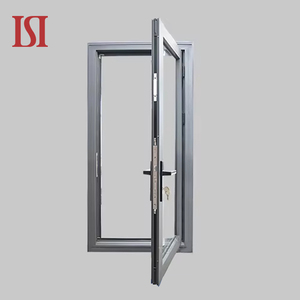
Top Brand Australian Standard 2047 Aluminum Alloy Casement Hinged Glass Commercial Entry Doors Chinese Design Fiberglass Sound
Contact Us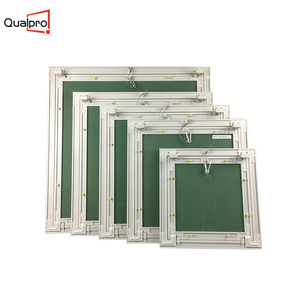
600x600 Aluminum Access Panels and Access Doors AP7710
Contact Us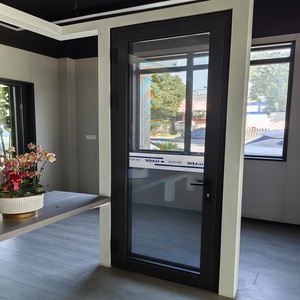
High-Performance 100T Narrow-Frame Insulated Modern Aluminum Alloy Tempered Glass Waterproof Swing Door for Hotels Villas
Contact Us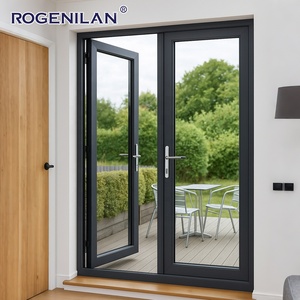
Rogenilan China Supplier Customized Size Aluminum Doors And Window Double Large Glass Fixed French Door For Houses
Contact Us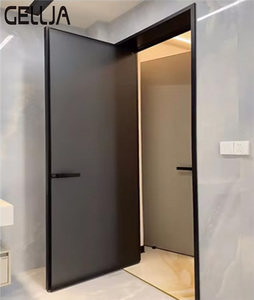
Metal Door Frame Doors Modern Indoor Contemporary Style Aluminium Alloy Showerroom Casement Glass Door Suitable For Hotels
Contact Us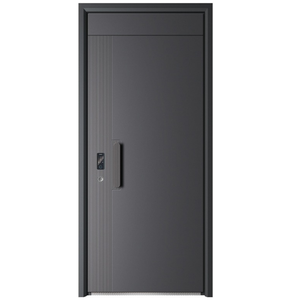
Factory Direct Supply Modern Design Customized Aluminum Alloy Main Entrance Door for House
Contact Us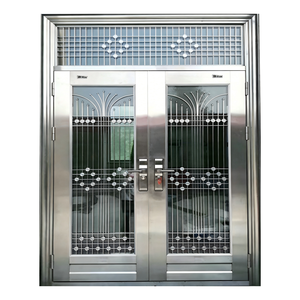
Luxury Villa Aluminum Door Unique Custom Design Side Opening Tuya Smart Compatible Waterproof Penthouse-Grade Security Anti-Pry
Contact Us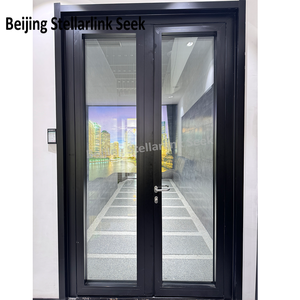
Extreme Cold Climate Weatherproof Triple Glazed Thermal Break Passive Aluminum Door for Nordic Scandinavian Home
Contact Us1. The Metallurgy of Modern Security: Why Aluminum Alloy Dominates Strategic Entrances
When specified for commercial, multi-family, and ultra-luxury residential projects, architectural doors must satisfy a rigorous triad of performance parameters: structural rigidity under extreme wind pressure, long-term corrosion resistance, and high-level anti-intrusion capabilities. Historically, structural steel and solid timber held dominance in high-security entry points. However, advancements in modern extrusion technology, alloy chemistry, and composite structural designs have established 6063-T5 and 6063-T6 aluminum alloys as the primary choice for top-tier security entrance systems.
Compared to traditional steel, high-tensile aluminum extrusions offer an outstanding strength-to-weight ratio while remaining completely immune to red oxide rusting. In coastal and high-humidity environments (classified under ISO 12944 atmospheric corrosion category C4 to C5-M), steel doors require frequent maintenance and recoating. In contrast, precision-machined aluminum doors enhanced with Fluorocarbon PVDF electro-static spraying or 25-micron anodization treatments maintain structural and aesthetic integrity for over 30 years with minimal maintenance.
Multi-Point Hook Locking
Integrated 8-to-12 point stainless steel hook locks and anti-pry strike plates designed to comply with European EN 1627 RC2/RC3 security ratings.
Thermal Break Polyamide PA66
24mm to 34mm Glass-fiber reinforced PA66 insulation struts preventing thermal bridging, drastically reducing U-factors down to 1.1 W/m²K.
Smart IoT Access Integration
Concealed electric mortise locks compatible with Tuya, Zigbee, biometric 3D facial recognition, and remote access control systems.
2. Engineering Benchmark: Material Performance Comparison for B2B Procurement
For architectural specifiers, procurement officers, and main contractors, evaluating door materials requires analyzing structural yield strengths, thermal transmittance (U-Factor), sound transmission loss (STC ratings), and total lifecycle costs. Below is a comparative breakdown evaluated against real-world job site requirements:
| Performance Specification | High-Tensile Aluminum (6063-T6) | Heavy-Duty Galvanized Steel | Solid Hardwood (Oak/Teak) |
|---|---|---|---|
| Tensile Yield Strength (MPa) | 210 - 240 MPa | 250 - 350 MPa | 40 - 70 MPa |
| Corrosion & Coastal Resistance | Exceptional (PVDF / Anodized) | Moderate (Prone to edge rust) | Poor (Moisture rot & warping) |
| Thermal Insulation (U-Factor Range) | 0.95 - 1.4 W/m²K (Thermal Break) | 1.8 - 2.6 W/m²K | 1.5 - 2.1 W/m²K |
| Acoustic Performance (STC Rating) | 35 - 45 dB (Triple Glazed EPDM) | 30 - 38 dB | 28 - 34 dB |
| Design Flexibility & Pivot Sizing | Ultra-Large (Up to 4m height) | Weight limited; hardware stress | Heavy; prone to seasonal warp |
| Maintenance & Recyclability | Zero maintenance / 100% Recyclable | Requires regular repainting | Requires frequent re-sealing |
3. Strategic Procurement Trends Shaping the Global Security Door Industry (2025–2030)
The global market for aluminum security doors and entry systems is undergoing a rapid evolution driven by changing building codes, extreme weather events, and residential luxury trends. Key market forces include:
Trend A: The Rise of Oversized Architectural Pivot Doors
Modern luxury villas in the Middle East, North America, and coastal Australia favor grand, statement entrances. Oversized pivot doors—reaching widths of 2.0 meters and heights exceeding 3.5 meters—are rapidly replacing double-leaf swing doors. To support leaf weights up to 400 kg without sagging, manufacturers utilize heavy-duty floor pivots with hydraulic self-closing mechanisms, coupled with multi-chamber aluminum profile geometry that prevents deflection under high wind loads.
Trend B: Extreme Climate Weatherproofing & Cold-Climate Passive House Compliance
In Northern European, Scandinavian, and Canadian markets, building regulations demand energy-efficient door systems. Passive house certification requires overall door U-factors to fall below 0.8 W/m²K. Achieving these stringent ratings requires triple-pane argon-filled Low-E tempered safety glass, multi-cavity PA66 thermal breaks, and continuous EPDM foam perimeter gaskets that stop air infiltration even under 600 Pa test pressures (compliant with EN 12207 Class 4).
Trend C: Integration of Hidden Smart Access Control & Cyber-Physical Security
High-end residential developments are moving away from traditional mechanical keys toward smart access ecosystems. Enterprise security manufacturers integrate motorized multi-point locks directly within the aluminum door profile. Features such as 3D infrared facial recognition, encrypted RFID keycards, biometric fingerprint sensors, and mobile app connectivity via Tuya/Matter protocols are now pre-wired during factory assembly, ensuring sleek aesthetics and tamper-resistant security.
Infrastructure & Manufacturing Capability
Novor Front Door Technology Co., Ltd. operates three specialized industrial production plants tailored to specific product categories, offering streamlined procurement under a single technical team:
Yongkang Plant (Zhejiang)
Specialized in heavy cast aluminum doors, artistic villa main entry gates, and luxury anti-pry security doors with solid aluminum panel castings.
Foshan Plant (Guangdong)
Focused on precision aluminum extrusions, thermal break casement systems, ultra-narrow sliding patio doors, and high-end hardware integration.
Haikou HQ & Plant (Hainan)
Oversees international export compliance, project engineering documentation, custom CAD/BIM shop drawings, and UL-certified fire-rated door assemblies.
4. Step-by-Step Quality Control & OEM/ODM Customization Workflow
Exporting high-value architectural products requires absolute precision from raw billet to job site delivery. To avoid costly installation errors overseas, leading manufacturers adhere to a structured 4-step workflow:
- Technical Architectural Consultation & CAD/BIM Review: Shop drawings are generated based on architectural opening schedules, verifying wall structural opening dimensions, threshold sub-floor recess details, and code-required wind-load pressure calculations (AS 2047, NFRC, or CE compliance).
- Precision CNC Machining & Surface Coating: Aluminum profiles are processed on multi-axis CNC machining centers for exact mortise cutouts, lock slots, and hinge positioning. Profiles undergo chromate-free pre-treatment followed by Qualicoat-certified powder coating or anodization.
- Pre-Assembly & Quality Auditing: Locks, smart sensors, glass units, and perimeter weather-stripping are pre-assembled in the factory. Each door leaf undergoes squareness checks, sash clearance measurements, and lock engagement testing prior to approval.
- Export-Grade Protective Packaging: Units are encased in multi-layer protective film, wrapped with foam corner guards, and sealed within fully enclosed plywood crates lined with anti-moisture VCI film for long-distance maritime freight.
Frequently Asked Questions for Sourcing & Sizing
Direct technical answers regarding compliance testing, international freight, customization options, and installation warranty support.
Q: Which certifications do your aluminum doors and windows hold?
Our product lines are tested and certified to CE, UL 10C, NFRC energy rating standards, Australian AS 2047, Canadian CSA, and ISO 9001 quality management requirements. Third-party factory audits and product testing are conducted by TÜV AUSTRIA and Bureau Veritas. Full test reports are provided per product series alongside CAD shop drawings.
Q: What is the typical factory production lead time?
Standard manufacturing lead time is 15 to 30 working days following final shop drawing sign-off and color sample approval. For multi-phase commercial projects or high-volume residential developments, production schedules are batched to match your site construction milestones and container loading logistics.
Q: Can you custom-engineer systems to US, Canadian, European, and Australian building codes?
Yes. Systems are custom-engineered for target destination requirements: Florida NFRC energy labels and Miami-Dade hurricane impact ratings for the USA, low U-factor thermal breaks for Canada, CE marking for the EU, and AS 2047 structural and water-head testing for Australia. Frames can be pre-slotted for North American timber framing or European masonry rough openings.
Q: What OEM and ODM customization options are supported?
We offer complete OEM/ODM manufacturing. This encompasses custom extrusion die development, bespoke door leaf panelling designs, custom RAL color matching, dual-color anodizing, integration of third-party smart locks, specialized security glass specs (laminated bullet-resistant or acoustic PVB), and private labeling for global distributors.
Q: How are oversized security doors packed to prevent transit damage?
Door leaves and outer sub-frames are protected with scratch-resistant surface film, edge corner protectors, and dense EPDM wrap. Units are secured inside fumigation-free, export-grade wooden crates with internal steel banding to prevent displacement during ocean transport and terminal handling.
Q: What warranty coverage and technical installation support are provided?
We back our door and window systems with a comprehensive 5-year structural and hardware warranty. Overseas projects receive detailed 3D step-by-step assembly guides, exploded hardware diagrams, and direct video technical support connecting site engineers with our factory technical team.
Request a Technical Quote & Specification Review
Submit your architectural opening schedules, project CAD files, or custom engineering requirements. Our technical team responds within 24 hours with complete budget estimations and shop drawing proposals.
Contact Us