High-Performance Aluminum Exterior Door Systems for Tokyo
Custom-engineered exterior entry systems optimized for Tokyo's stringent structural, thermal, and space-efficiency building standards.
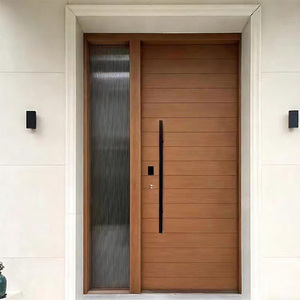
Hot Selling American & Australian Style Main Entrance Aluminum Alloy Safety Door
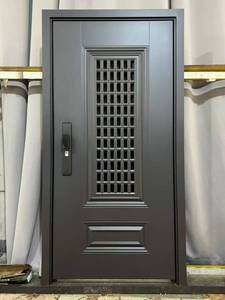
Secure Aluminum Entrance Exterior Door With Integrated Smart Lock
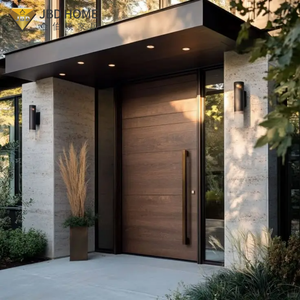
Cost-Effective Aluminium Pivot Exterior Front Entry System for Luxury Villas
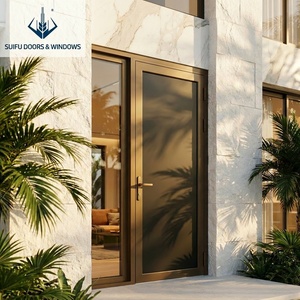
French Style Aluminum Swing Front Entry Door (AS2047 Hurricane Proof)
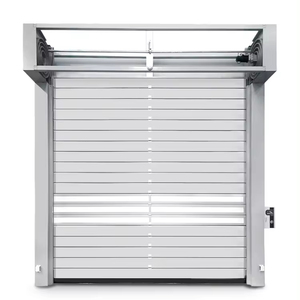
Industrial Turbo Hard Fast Actuating Aluminum Exterior Security Door
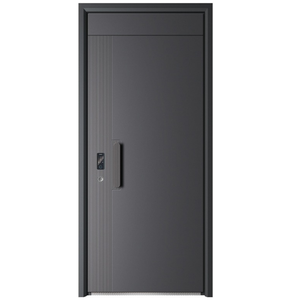
Factory Direct Modern Design Customized Aluminum Alloy Main Entrance Door
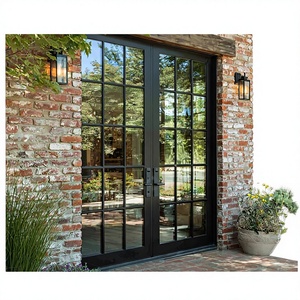
Sunnysky French Style Retro Black Aluminum Swing Door with Double Glass
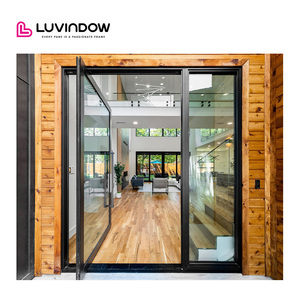
Modern Pivot Aluminum Glass Front Villa Entry Door (Thermal Break Energy Efficient)
Tokyo Architectural Landscape: Structural & Regulatory Imperatives for Aluminum Exterior Doors
Procuring exterior entrance systems for the Greater Tokyo Metropolitan Area requires an in-depth understanding of Japan’s unique structural, climatic, and urban planning codes. Tokyo presents a dense architectural ecosystem where high-frequency seismic activity, annual typhoon vectors originating in the Pacific, strict municipal noise limits, and aggressive zero-energy building targets converge. For Japanese architects, general contractors (ゼネコン - Zenekon), and commercial importers, specifying imported aluminum exterior doors necessitates rigorous compliance with national building frameworks alongside localized performance customization.
1. Seismic Performance & Dynamic Frame Elasticity (Building Standard Law Compliance)
Tokyo is situated within Seismic Zone 1, governed strictly by the Building Standard Law of Japan (建築基準法 - Kenchiku Kijun-hō). Exterior doors must act not only as environmental barriers but also as structural safety valves during major earthquakes (Shin-Taishin standard). Under intense lateral shear stress, standard rigid door frames risk racking or jamming, trapping occupants inside during emergency evacuations.
Novor’s aluminum exterior doors engineered for Tokyo utilize high-tensile 6063-T6 architectural aluminum extrusions featuring corner assembly brackets with engineered mechanical play. This allows controlled frame racking up to 1/150 story drift ratio without binding the door leaf or cracking perimeter glazing. Dual-compression corner keys ensure structural memory, returning the entrance system to perfect square after seismic shaking subsides.
2. Typhoon-Driven Rain & Severe Wind Pressure Resistance (JIS A 4702)
Autumn typhoons traveling up Tokyo Bay bring intense wind-driven rain exceeding 1,500 Pa dynamic wind pressure and rainfall rates over 120 mm/hr. Under Japanese Industrial Standards (JIS A 4702), exterior door assemblies installed in coastal districts like Odaiba, Toyosu, or Yokohama must certify to strict wind pressure (Grade S-5 to S-7) and water tightness (Grade W-5) thresholds.
Our Tokyo-spec aluminum doors incorporate multi-stage pressure equalization chambers within the threshold extrusions. Synthetic continuous EPDM weatherstrips form triple-barrier perimeter gaskets, while concealed internal weep holes channel driven rain outward before capillary action can breach the interior finished floor line.
3. Tokyo Metropolitan ZEH (Zero Energy House) Thermal Directives
To combat urban heat-island effects and reduce metropolitan carbon emissions, the Tokyo Metropolitan Government has mandated zero-energy performance baselines for new residential builds. Thermal bridging across metal door frames is a primary source of HVAC energy loss during Tokyo's humid summers and cold winters.
We deploy high-density polyamide thermal break strips (PA66GF25 with 25% glass fiber reinforcement) to mechanically separate exterior and interior aluminum extrusions. Combined with double or triple Low-E tempered glass units charged with 90% Argon gas, our thermal break pivot and swing doors achieve overall system U-values as low as 1.35 W/m²K, comfortably satisfying Tokyo Zone 6 thermal insulation standards.
Localized Application Scenarios Across Greater Tokyo Neighborhoods
Architectural typologies across Tokyo vary drastically by municipality. Sourcing the right aluminum exterior door system depends heavily on site constraints, zoning density, and regional aesthetic demands.
Luxury Residential Villas
Target Locations: Minato-ku (Hiroo, Azabu), Setagaya-ku, Den-en-chofu.
High-end single-family residences require statement entryways with large structural spans. Our custom oversized aluminum pivot doors and cast aluminum luxury doors deliver bold contemporary aesthetics while providing heavy multi-point security locking, smart keyless entry, and silent soft-close hydraulics tuned for private estates.
Narrow Infill & Compact Urban Homes
Target Locations: Shinjuku-ku, Shibuya-ku, Suginami-ku, Nakano.
Tokyo’s tight residential lots require zero-clearance efficiency. Out-swing thermal break aluminum doors and ultra-slim profile double-glazed swing systems optimize interior living area without encroaching on required setback lines. Flush threshold profiles ensure barrier-free transition (Universal Design).
Commercial & Retail Storefronts
Target Locations: Ginza, Omotesando, Roppongi, Aoyama.
High-foot-traffic flagship boutiques demand transparent sightlines paired with industrial durability. Our retro black French swing doors and heavy-duty automatic turbo hard doors offer maximum glass area, emergency panic hardware integration, and anodized scratch-resistant surface treatments.
Emerging Architectural & Material Trends in the Tokyo Exterior Door Sector
The Japanese building envelope market is experiencing rapid technological evolution driven by consumer preferences and legislative decarbonization goals:
1. Seamless Smart Lock & Home Automation Integration
Japanese homeowners heavily favor contactless access control. Sourcing doors with pre-milled CNC mortise slots designed specifically for Japanese electronic locking systems (such as Miwa, Tadokoro, or Bluetooth/Biometric smart systems) eliminates costly on-site modifications. Novor delivers OEM factory-installed smart lock integration with concealed wiring harnesses inside the aluminum thermal break core.
2. Ultra-Slim Sightlines with Concealed Heavy-Duty Hardware
Minimalist Japanese interior and exterior design (Japandi & Modern Zen) emphasizes ultra-clean sightlines. Traditional bulky hinges are being replaced by concealed 3D-adjustable 180-degree hinges and recessed floor pivots capable of supporting glass-and-aluminum leaves weighing over 180 kg seamlessly.
3. Marine-Grade Surface Coatings for Tokyo Bay Salt Corrosion
Developments along Tokyo Bay (Koto-ku, Shinagawa, Chiba coastal belt) face harsh saline air exposure. Standard powder coatings quickly degrade. Novor utilizes 70% Fluorocarbon (PVDF) spray coating systems tested under 3,000-hour salt spray chambers to guarantee long-term color fastness, anti-chalking, and zero aluminum pit corrosion.
Tokyo Market Technical Specification Matrix
Compare our core aluminum exterior door engineering benchmarks against typical Japanese project demands:
| Door System Series | Thermal U-Value | Wind Load (JIS A 4702) | Acoustic Damping | Primary Tokyo Application |
|---|---|---|---|---|
| Cast Aluminum Villa Entry Door | 1.6 W/m²K | Grade S-6 (2,000 Pa) | 32 dB (T-2 Rating) | Luxury Estate Gates & Main Entryways |
| Thermal Break Aluminum Pivot Door | 1.35 W/m²K | Grade S-7 (2,400 Pa) | 35 dB (T-3 Rating) | Modern Residence & Architectural Builds |
| French Double Glazed Swing Door | 1.4 W/m²K | Grade S-5 (1,600 Pa) | 38 dB (T-3 Rating) | Courtyard, Balcony & Storefront Openings |
| Industrial Hard Turbo Fast Door | 2.1 W/m²K | Grade S-4 (1,200 Pa) | 25 dB (T-1 Rating) | Commercial Logistics & Parking Entrances |
| Smart Access Security Aluminum Door | 1.5 W/m²K | Grade S-6 (2,000 Pa) | 34 dB (T-2 Rating) | High-Density Urban Family Residences |
Manufacturing Strength & B2B Supply Chain Capabilities: Novor Front Door
As a global pioneer in architectural opening solutions, Novor Front Door Technology Co., Ltd. provides Japanese importers, developers, and trade contractors direct factory access to world-class aluminum engineering.
Triple-Plant Specialization
Production is segmented across dedicated specialized facilities: Yongkang (Cast Aluminum & Villa Entry Doors), Foshan (Thermal Break Profiles & Architectural Window Systems), and Haikou HQ (Project Engineering & Steel Security Assemblies).
Certified International Compliance
Our manufacturing lines operate under ISO 9001 certified management systems. All product series undergo third-party testing by accredited labs including TÜV AUSTRIA and Bureau Veritas, fulfilling CE, UL, NFRC, and AS2047 requirements.
15–30 Day Delivery & Export Packing
Optimized production scheduling guarantees standard orders are manufactured within 15–30 days. Units are protected with anti-scratch film, rigid plastic corner guards, and fully enclosed fumigated wooden crates built for ocean freight into Tokyo Port or Yokohama.
Frequently Asked Questions by Tokyo B2B Buyers & Importers
Do your aluminum exterior doors meet Japanese JIS A 4702 standards and local Tokyo building codes?
Yes. Our door systems designed for the Japanese market are engineered to satisfy JIS A 4702 performance criteria for wind resistance (S-5 to S-7), water tightness (W-5), and sound insulation (T-2 to T-3). Test reports covering U-values, structural frame elasticity under shear force, and hardware cycle endurance are provided with official project proposals.
Can door dimensions be tailored to fit Japanese module grids (Shaku-kan 尺間) or non-standard rough openings?
Absolutley. We offer full OEM and ODM structural customization. Whether your architectural drawings rely on traditional Japanese grid modules (e.g., 910mm / 1,820mm centers) or contemporary custom metric dimensions, our engineering team generates millimetrically accurate shop drawings prior to extrusion cutting.
How do your thermal break doors manage Tokyo’s hot, humid summers and freezing winter drafts?
Our doors feature PA66GF25 polyamide thermal barriers that physically isolate the interior and exterior aluminum frames. Combined with double or triple-pane Low-E insulated glass units filled with Argon gas and perimeter multi-seal EPDM weatherstripping, our systems block summer heat gain and retain interior warmth during winter, preventing frame condensation.
What is the typical shipping lead time from your factory to Tokyo Port or Yokohama?
Standard production requires 15 to 30 days depending on finish specifications and glass customizer requirements. Ocean freight transport from our coastal dispatch ports to Tokyo Port or Yokohama Port typically takes 5 to 9 transit days, allowing for fast project fulfillment across Japan.
Are your door leaves compatible with popular Japanese smart lock brands like Miwa or Tadokoro?
Yes. We provide pre-cut CNC lock mortises tailored to specified Japanese smart lock hardware, biometric keypads, or automated electric strike systems. Wiring conduits are integrated inside the insulated core during factory assembly for clean on-site plug-and-play installation.
What warranty coverage is provided for commercial and residential projects in Japan?
We provide a comprehensive 5-year structural warranty on all aluminum extrusions, surface finishes, and insulated glass units, alongside remote technical installation support for Japanese site management teams.
Ready to Engineer Your Tokyo Project’s Exterior Doors?
Submit your door schedule, CAD drawings, or thermal specification requirements to our senior technical team for a detailed compliance review and competitive factory direct quotation.